From 5 Agents to 50: What Changes When Your Outbound Sales Team Starts Scaling?
At a small size, an outbound team can run on shared memory. Reps know which prospects need a callback. A manager hears enough calls to spot problems. A spreadsheet or chat message can fill in the gaps. As the team grows, those habits stop being reliable. More people create more handoffs, records, coaching needs, and…
At a small size, an outbound team can run on shared memory. Reps know which prospects need a callback. A manager hears enough calls to spot problems. A spreadsheet or chat message can fill in the gaps.
As the team grows, those habits stop being reliable. More people create more handoffs, records, coaching needs, and calls to coordinate. Scaling an outbound sales team is not just multiplying the small version of it. It means replacing informal workarounds with clear routines before they become bottlenecks.
Here’s what changes as your team grows, what to prepare, and how to make systems lead headcount rather than trail it.
1. Staffing shifts from individual hires to repeatable ramp
When you hire one rep at a time, onboarding can happen through shadowing and quick questions. With a hiring cohort, the same approach can overwhelm whoever usually trains new starters. New reps may get different instructions, or spend too much time waiting for someone to show them the next step.
Write down the basics before the next cohort arrives:
- What new reps need to learn about your product, prospects, and campaign.
- How they should prepare, place calls, record outcomes, and set follow-ups.
- What they need to demonstrate before handling work independently.
- Who owns onboarding and where new hires can get help.
Treat ramp time as a planning input, not an afterthought. Estimate when new reps will be ready for different parts of the role, and plan coverage while they learn. Track where the cohort needs more practice. If the same step slows several people down, review the training or process, not only individual performance.
2. Supervision moves from listening to a coaching rhythm
Direct observation is useful, but it cannot stay the only way you understand call quality. As the team grows, a manager cannot listen to every conversation and still handle staffing, pipeline reviews, and daily operations.
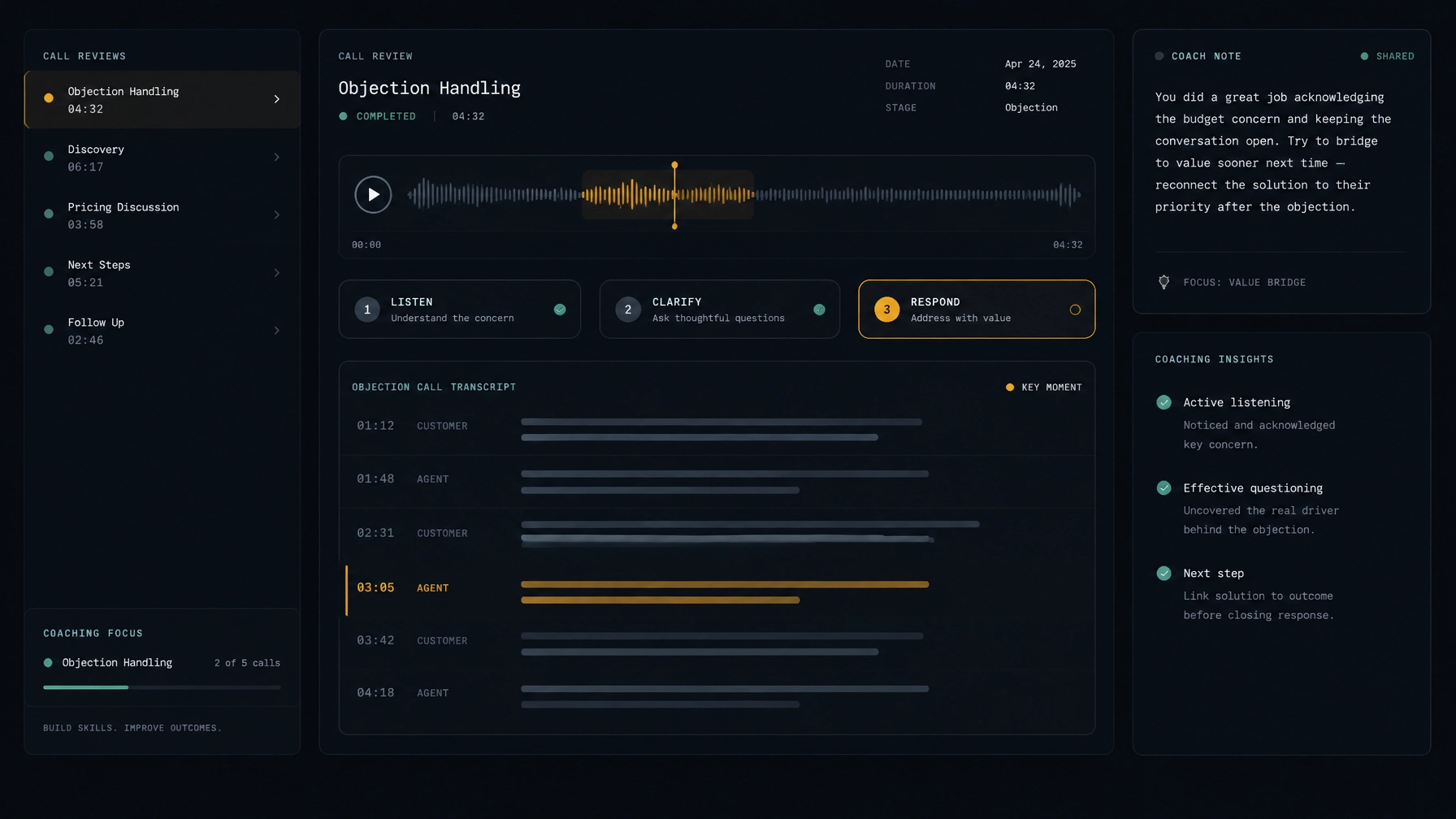
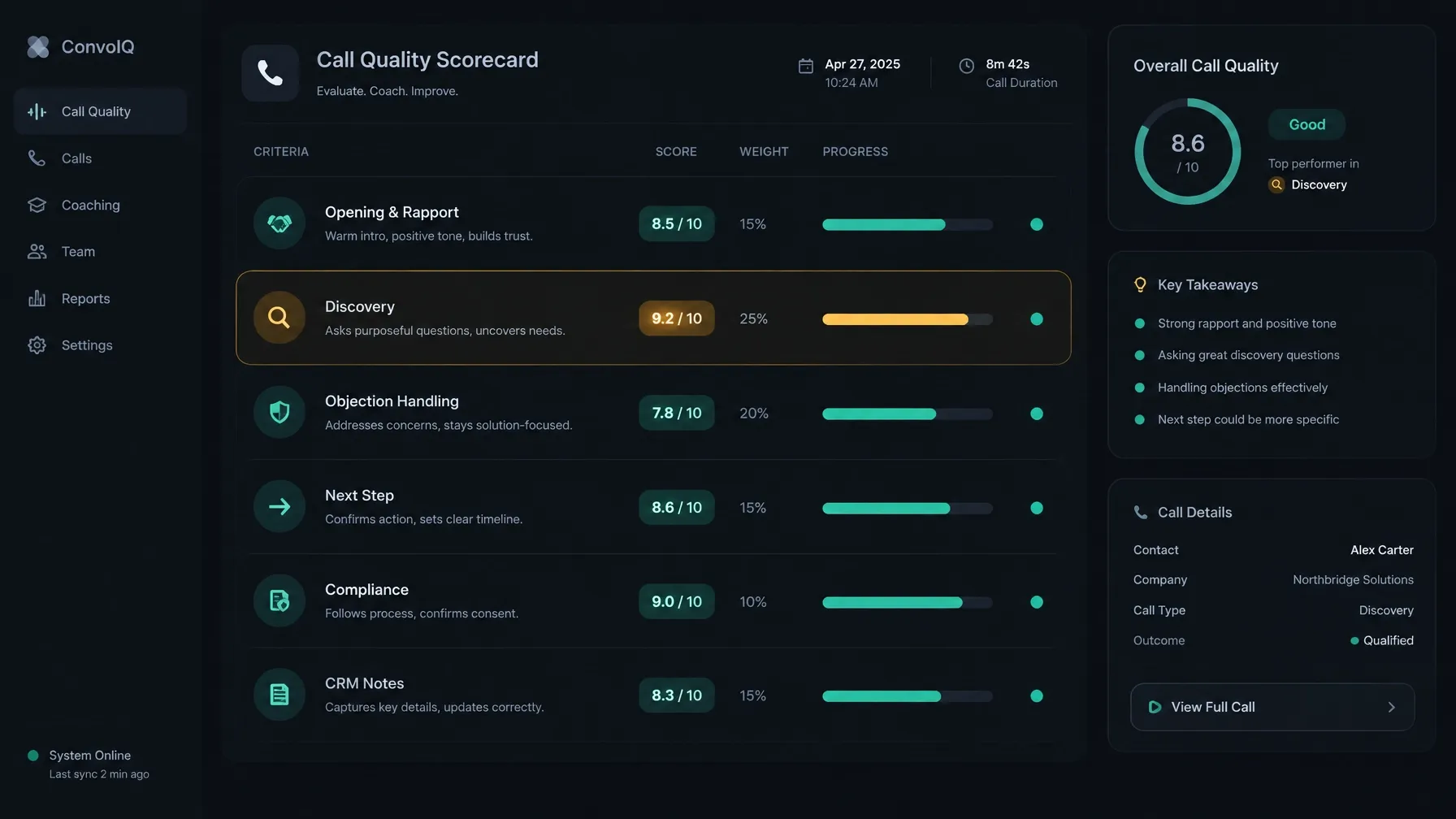
Replace constant oversight with a consistent review routine. Select a representative sample of calls across reps, campaigns, and experience levels. Use a shared scorecard so reviewers look for the same observable behaviors, such as clear openings, relevant questions, accurate notes, and agreed next steps.
Then make coaching specific. Point to a moment in the call, identify one behavior to practise, and decide when to review it again. For practical guidance, see our call quality scorecard guide.
Before using recordings or automated analysis, confirm what is enabled in your setup and what your privacy and compliance requirements allow. Those capabilities and requirements can vary.
3. Reporting shifts from activity totals to comparisons
A small team may get by with a daily count of calls and conversations. At a larger size, those totals tell you what happened, but not necessarily why. If results change, you need to know whether the cause is a campaign, lead list, message, cohort, or workflow.
Build reporting in layers:
- Rep: Is each person following the agreed process and recording outcomes?
- Campaign and list: Which segments produce useful conversations and next steps?
- Cohort: Are newer hires progressing through the same ramp stages?
- Follow-up: Are callbacks and other agreed actions being completed?
Use the comparisons to decide what to test or fix. For example, if one campaign has many attempts but few meaningful conversations, check its list and message before changing every rep’s call approach. Consistent outcome definitions and timely call records matter; otherwise, the reports compare inconsistent inputs.
4. Workflows and roles become more distinct
In a small operation, one person may handle setup, calling, follow-up, and deal management. As sales team growth continues, people often specialize. Fronters may qualify prospects. Closers may handle later-stage conversations. Managers and admins may own coaching, reporting, or workspace setup.
Specialization can make ownership clearer, but it also creates handoffs. Define what each role needs to see, what it owns, and what information it must leave for the next person. Keep the workflow consistent across campaigns unless there is a clear reason to change it.
When every group invents its own stages, scripts, and follow-up rules, sales operations management becomes a reconciliation job. Standardize the shared process, then make campaign-specific differences explicit.
5. Technology and telephony need deliberate capacity planning
Manual lists, ad-hoc dialing, and one-off spreadsheets can be tolerable when few people use them. More users mean more chances for duplicate calls, missed follow-ups, inconsistent records, and unclear ownership.
Review the whole calling workflow before you expand:
- How does a rep get the next contact?
- Where do they see call history and notes?
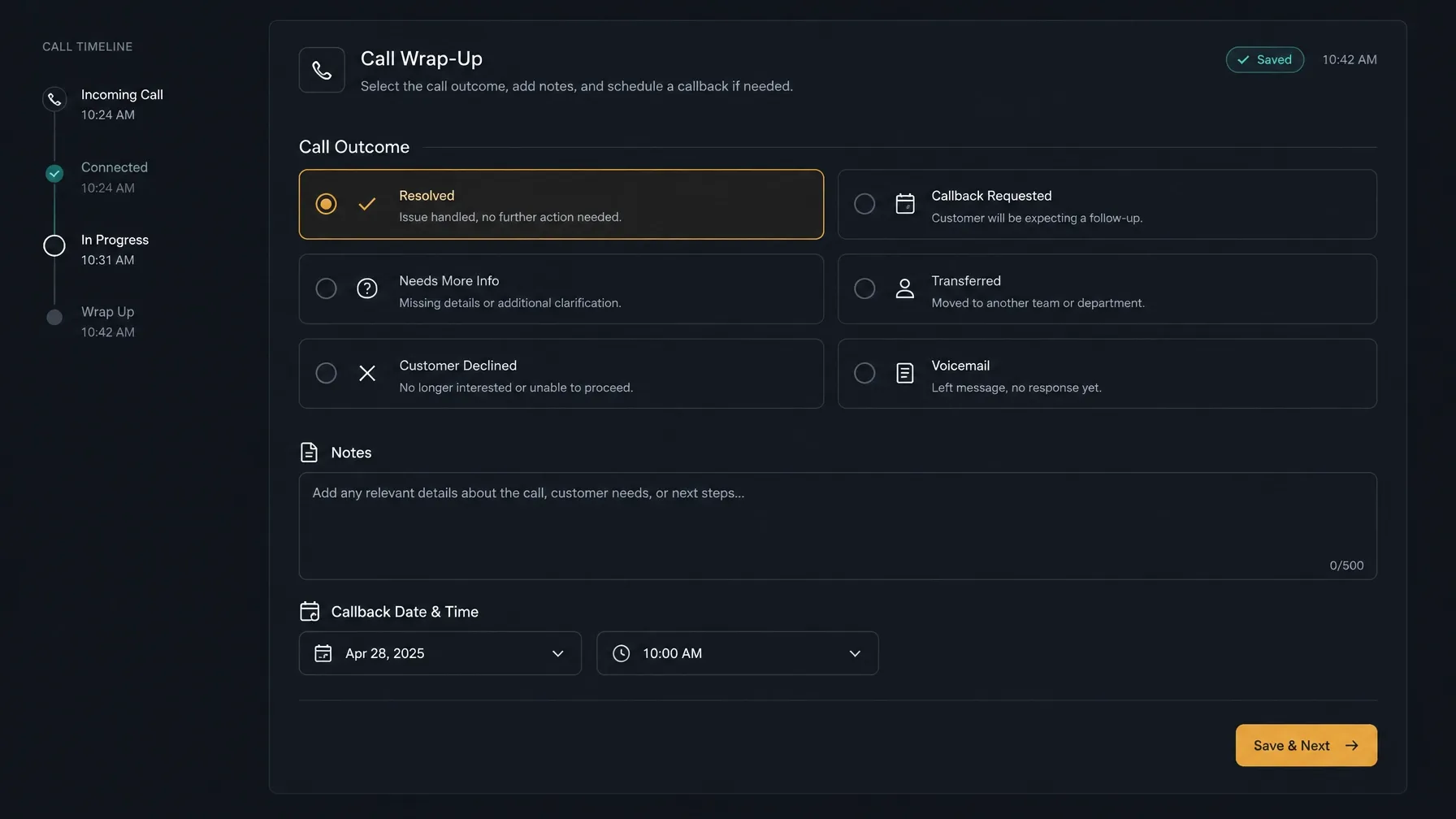
- How do they record the outcome and schedule the next action?
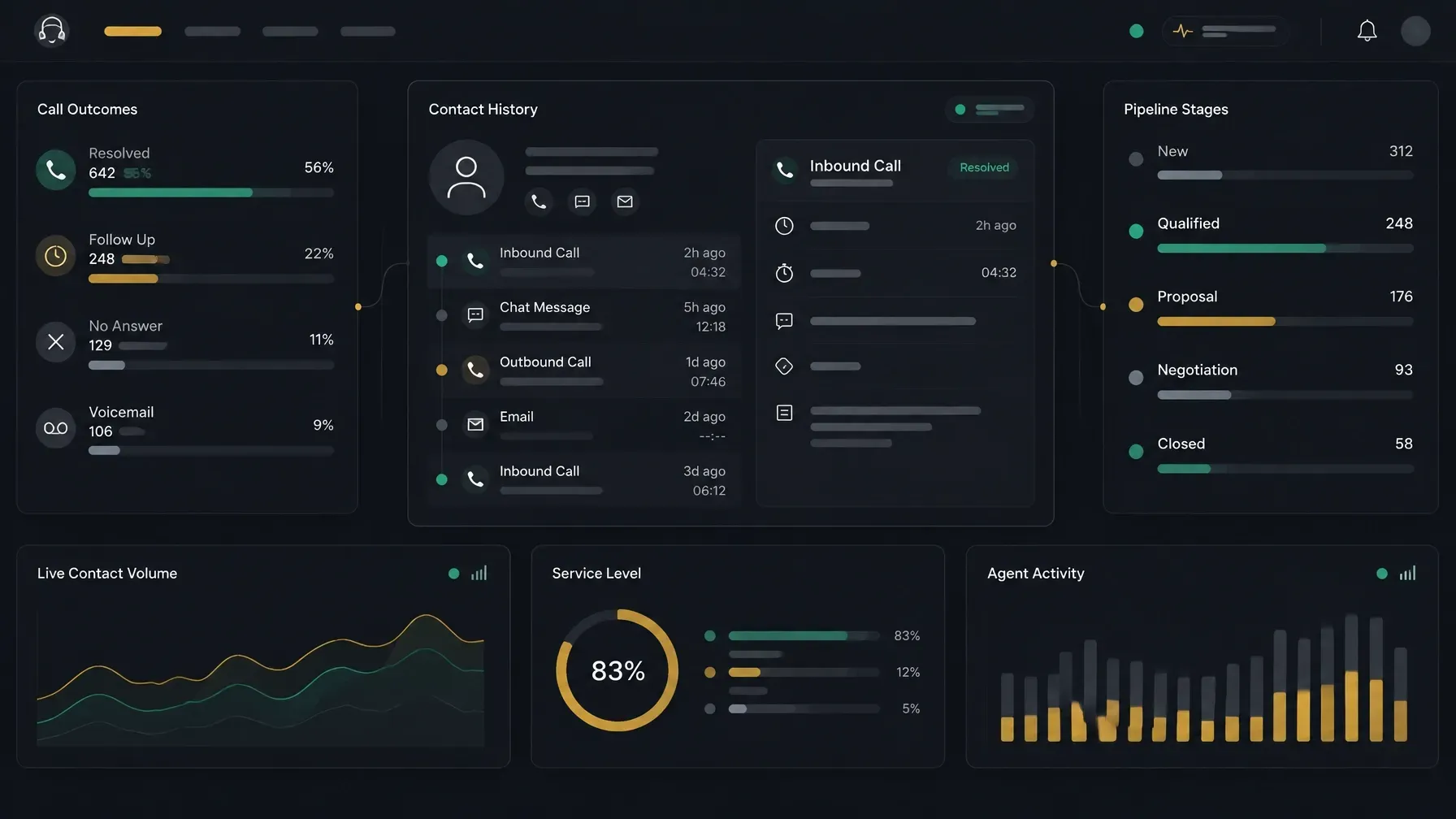
- How do managers review activity and campaign results?
- Who checks telephony capacity and provider limits?
For capacity, plan around peak simultaneous call activity, not headcount alone. Dialing mode, ringing attempts, inbound calls, transfers, and provider limits can all affect how much capacity you need. Use your own call data and confirm how your provider counts channels and call legs. Our guide to planning SIP channel capacity covers the questions to review.
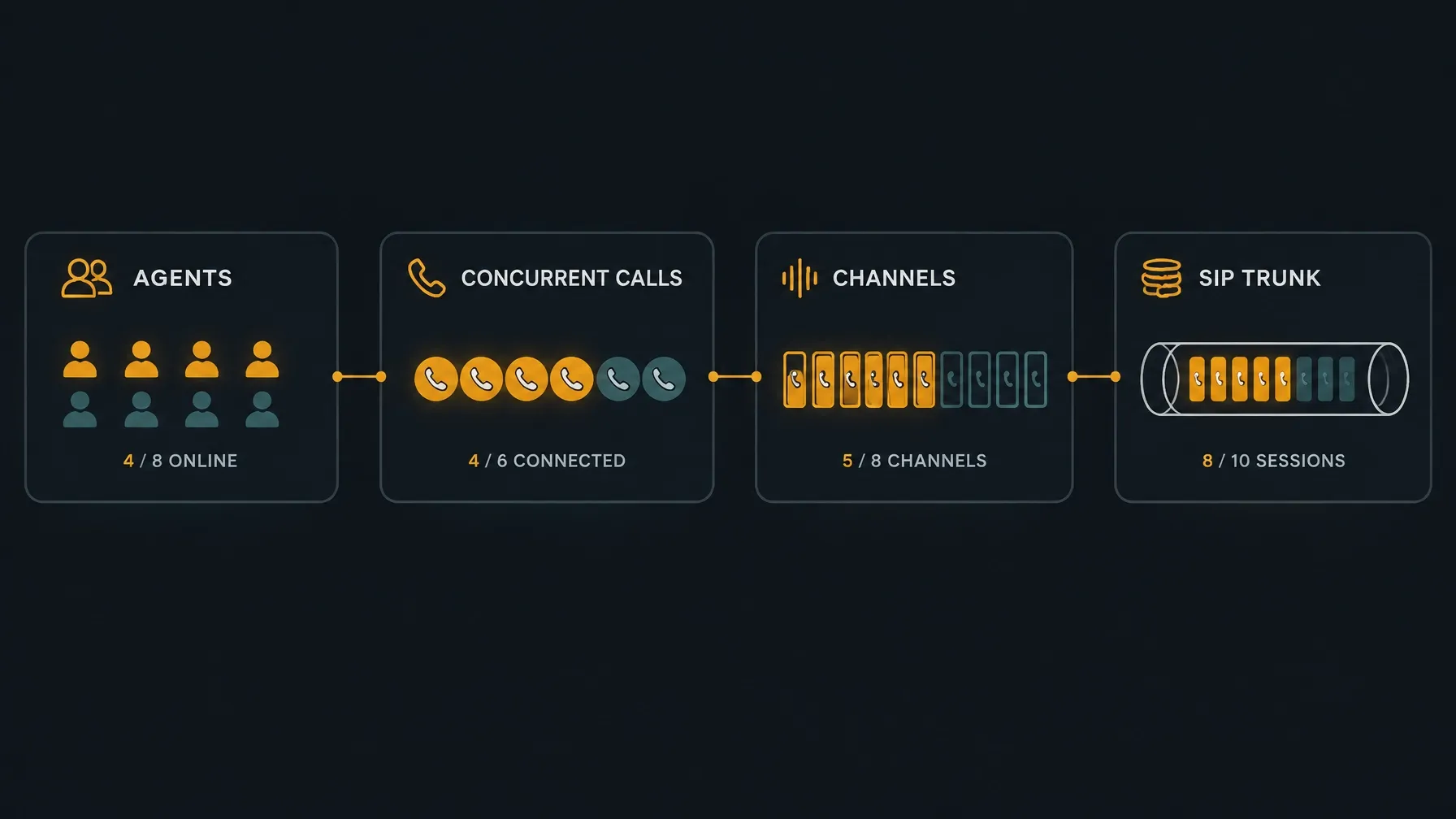
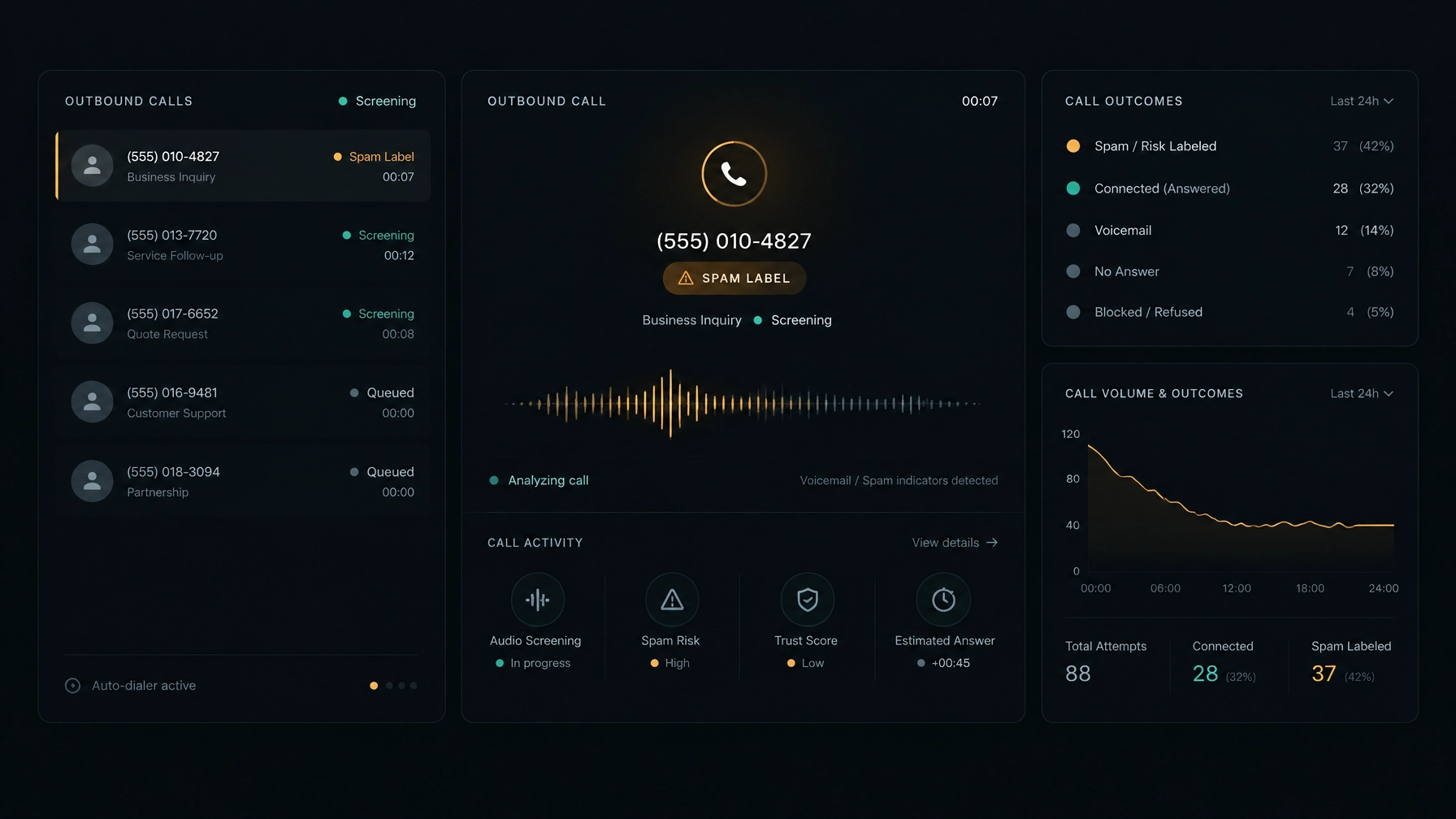
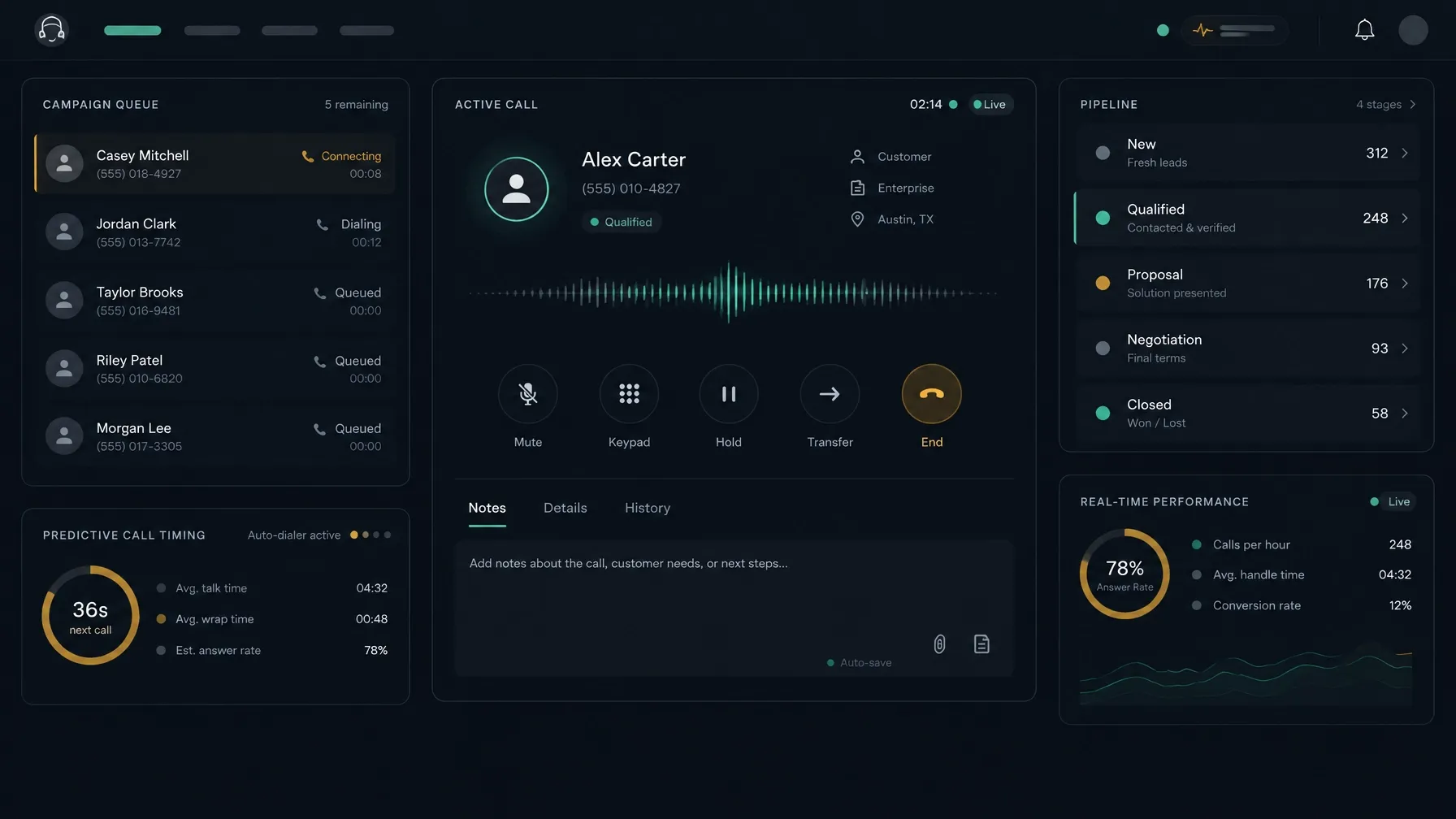
A platform can bring calling and contact workflows closer together, but verify the setup your operation needs. Ask what dialing modes are available, how your SIP provider fits, and which reporting and coaching features are enabled for your deployment.
6. Process documentation replaces tribal knowledge
If a process exists only in a manager’s head, the team depends on who is on shift. That becomes risky when new reps join, schedules change, or managers are unavailable.
Document the instructions people need to do the work consistently:
- Scripts and playbooks: What should reps cover, and what can they adapt?
- Disposition definitions: Which outcome should they select in each situation?
- Escalation rules: When should a rep involve a manager or another team?
- Follow-up standards: What needs an owner, a due date, or a written note?
Keep documents short and usable during the work. Review them when campaign feedback shows that instructions are unclear or no longer fit the process. For list ownership and record hygiene, see the hidden cost of manual lead lists.
7. Customer experience and compliance need consistent controls
More reps and more locations make it harder to rely on informal reminders. Prospects should not receive conflicting messages, repeated calls because records are unclear, or outreach outside the hours your campaign permits.
Set clear rules for contact preferences, do-not-call requests, calling windows, and record access. Make sure reps know how to pause and escalate a questionable contact. Review the requirements that apply to your call types and locations with qualified counsel; a dialer setting is not a substitute for that review.
Consistency also depends on the customer record. Make sure the next person can see what happened, what the prospect asked for, and what the team agreed to do next.
A readiness checklist before your next cohort
Before you expand, check whether you can answer “yes” to these questions:
- Can a new rep follow onboarding without relying on one person’s memory?
- Do managers have a repeatable call-review and coaching cadence?
- Can you compare outcomes across campaigns, lists, and cohorts?
- Are roles, handoffs, and follow-up ownership clear?
- Are call outcomes and escalation rules documented?
- Have you reviewed peak telephony capacity with your provider?
- Are calling practices and customer records governed by clear rules?
If several answers are “no,” fix the relevant workflow before adding more volume. Hiring into an unclear process tends to multiply the confusion.
Sequence growth so systems lead headcount
Start with the work, not the hiring target. Map how leads enter the operation, how reps contact them, what happens after each call, and how managers review results. Identify the bottleneck. Then improve that workflow, test it with a small group, and document what works before repeating it with the next cohort.
A contact center platform is worth evaluating when you need more structure across calling, records, and reporting. NexusDialer’s public site describes progressive and predictive dialing, a built-in workspace for contacts and deals, call history with outcomes and callbacks, role-based workspaces and reports, and SIP trunk configuration. Calling requires workspace approval and telephony setup. Confirm the current features and requirements for your deployment at NexusDialer.com.
For a broader view of the operational changes involved, read the modern contact center playbook.
Frequently asked questions
When should you hire more sales agents?
Hire when demand and capacity support another cohort, and you can onboard and manage new reps consistently. Before adding people, check whether your current process, lead supply, supervision, and telephony can support the extra work.
How do you manage a growing outbound team?
Set clear roles, document the calling process, review a representative sample of calls, and compare results across campaigns and cohorts. Give reps specific coaching and make follow-up ownership visible.
What breaks first when a call center scales?
It depends on the operation. Common pressure points include onboarding, manager visibility, inconsistent records, missed callbacks, and telephony capacity. Review where work waits or gets repeated to find your first constraint.
How should you plan call center infrastructure for growth?
Use actual call activity and provider limits to understand peak simultaneous calls. Review dialing mode, ringing attempts, inbound overlap, transfers, and planned campaigns with your telephony provider. Do not estimate capacity from agent count alone.
What should you standardize before expanding an outbound team?
Start with onboarding, call outcomes, follow-up rules, role handoffs, escalation steps, and call-review criteria. Keep the standards clear enough for reps and managers to use in daily work.
Meta title: How to Scale an Outbound Sales Team: Systems, Technology and Management
Meta description: Learn how to scale an outbound sales team with repeatable onboarding, effective coaching, clearer reporting, documented workflows, and planned telephony capacity.