Are Your Sales Agents Actually Good on the Phone? How to Build a Call Quality Scorecard That Drives Results
Your outbound team can hit its dial targets and still lose deals because the conversations are weak. Reps may open without context, miss useful discovery questions, or end calls without a clear next step. If you only hear a few calls, you may know something is off, but not whether it is a pattern or…
Your outbound team can hit its dial targets and still lose deals because the conversations are weak. Reps may open without context, miss useful discovery questions, or end calls without a clear next step. If you only hear a few calls, you may know something is off, but not whether it is a pattern or a bad day.
Outbound call quality assurance gives you a consistent way to review conversations, find specific behaviors to improve, and coach against a shared standard. A useful scorecard does not grade an agent’s personality or reduce every call to a number. It helps you see what happened and decide what to practise next.
What outbound call quality assurance measures
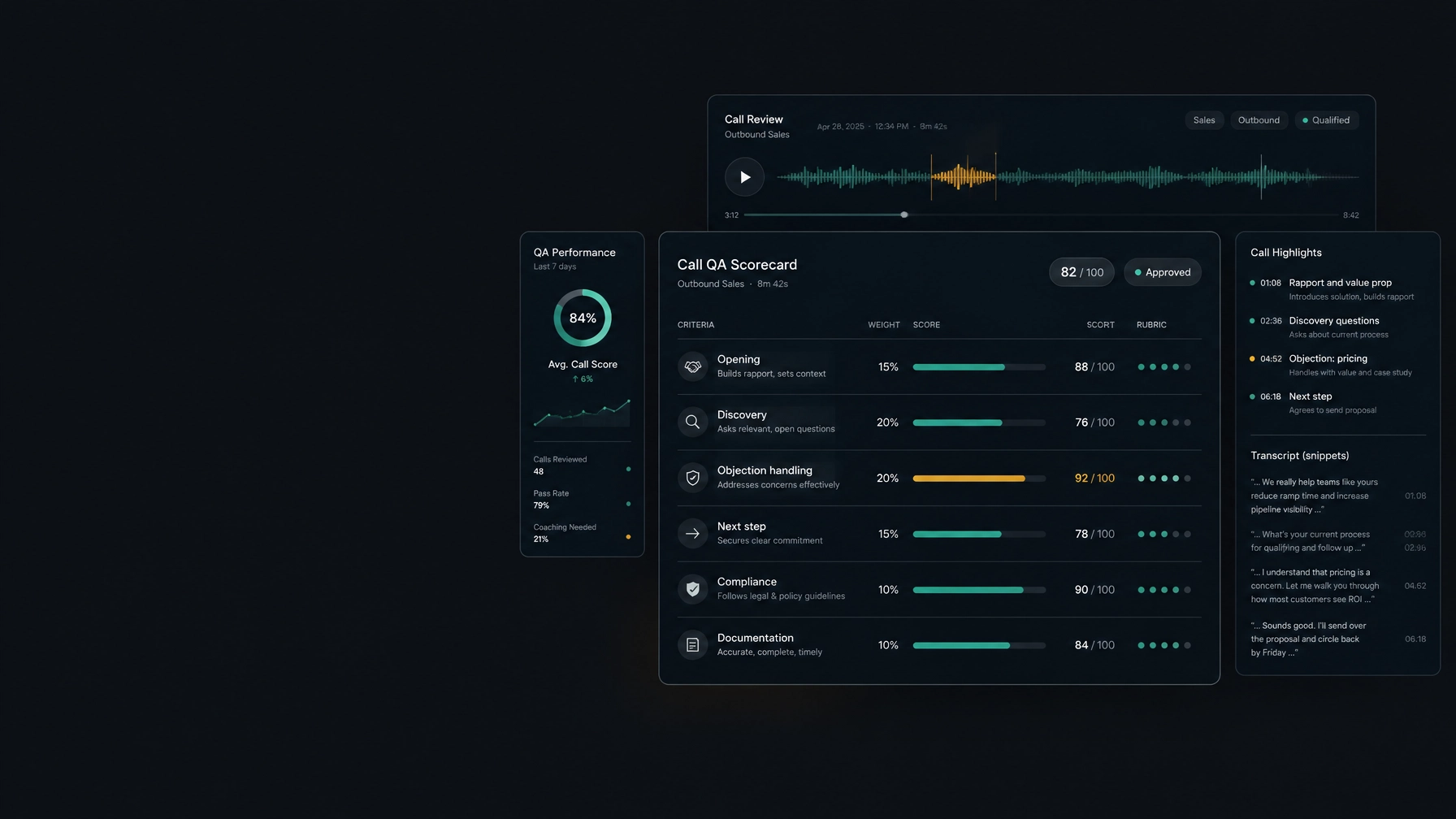
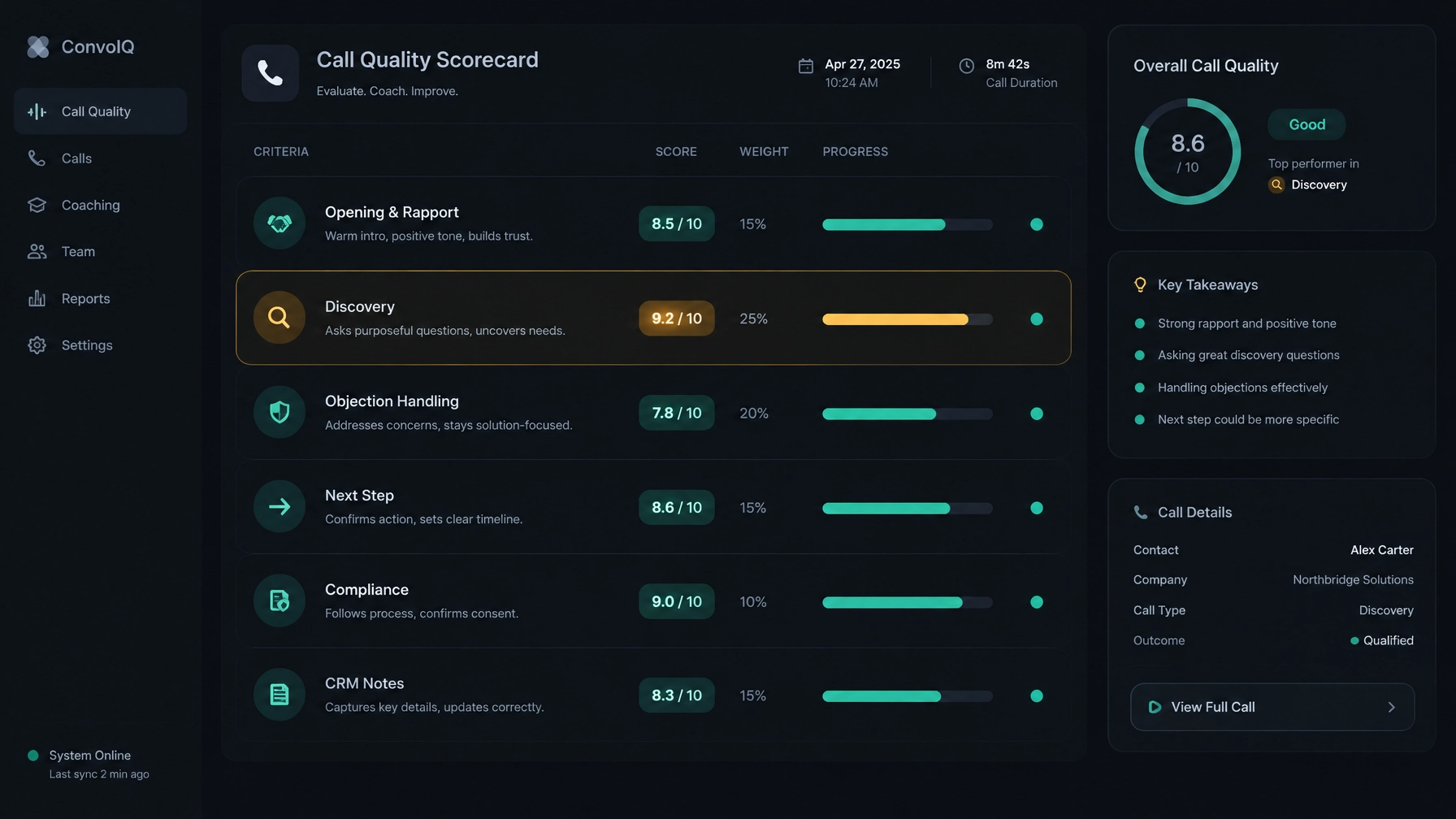
A call quality scorecard should follow the work your reps do during and after a conversation. Start with a small set of observable behaviors that fit your call type.
- Opening and rapport: Did the rep explain why they were calling and give the prospect a clear reason to continue?
- Discovery and qualification: Did the rep ask relevant questions, listen to the answers, and check their understanding?
- Objection handling: Did the rep clarify the concern and respond to what the prospect actually said?
- Next-step setting: Did the rep agree on a specific follow-up, meeting, or other action, including who owns it?
- Compliance-relevant behavior: Did the rep follow the applicable call requirements and team procedures?
- Documentation accuracy: Do the call notes, outcome, and follow-up reflect what happened?
The criteria will vary by campaign. A cold introduction may need a clear reason for calling. A follow-up call may need to confirm a previous concern or agreed action. Use a separate scorecard when call types require different behaviors.
Before recording or reviewing calls, confirm the notice, consent, privacy, access, and retention requirements that apply to your team and locations. Get qualified guidance when needed.
Build a scorecard that managers can use
A scorecard should be short enough to complete consistently and detailed enough to guide coaching. Begin with a handful of categories, then choose the behaviors that matter most to your sales process.
Choose and weight a small number of criteria
Weighting helps you show which parts of a conversation matter most. For example, a sample outbound scorecard might give more weight to discovery and objection handling than to a smooth opening. Treat the percentages below as a starting point to adapt, not an industry standard.
| Category | Example weight |
|---|---|
| Opening and rapport | 15% |
| Discovery and qualification | 25% |
| Objection handling | 20% |
| Next-step setting | 20% |
| Compliance-relevant behavior | 10% |
| Documentation accuracy | 10% |
Keep mandatory requirements distinct from conversational skills. Depending on your policies, a missed required step may need a separate review rather than being averaged into a weighted total. Define those rules with the appropriate compliance or legal stakeholders.
Define what each score sounds like
Avoid criteria such as “good discovery” or “professional tone.” Those phrases leave too much room for personal interpretation. Instead, describe what a reviewer can hear or verify.
For instance, for “confirms the prospect’s concern,” define the levels like this:
- Met: The rep checks their understanding of the concern before responding.
- Partly met: The rep acknowledges the concern but does not clarify it.
- Not met: The rep moves straight to a generic rebuttal.
Use a simple scale across the scorecard. Add a short note or timestamp to support each score. That gives the agent a clear example to review and gives the manager a reason for the rating.
Calibrate reviewers before rollout
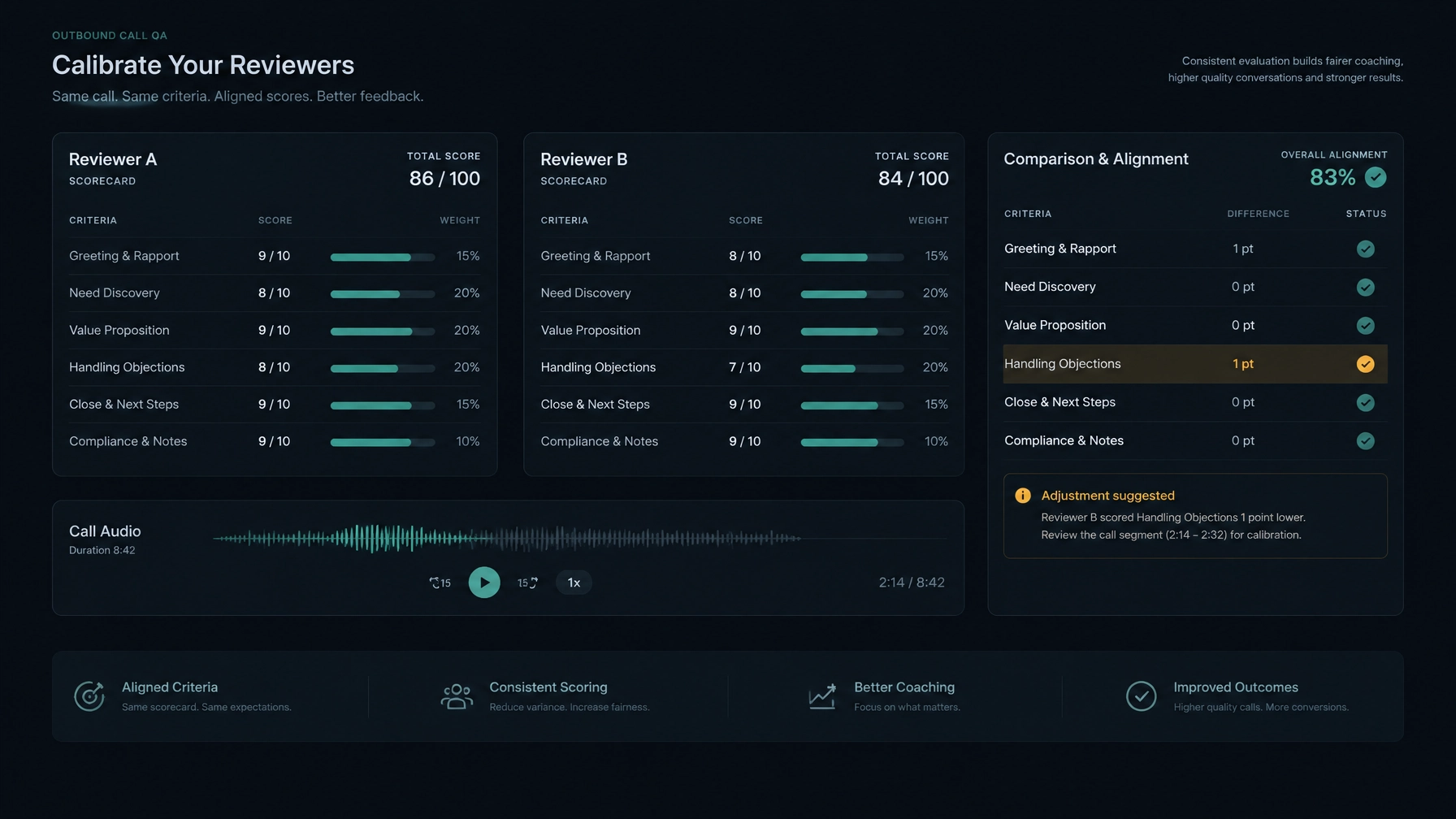
If two managers score the same call differently, agents may not know what standard to follow. Before using the scorecard across the team, have reviewers score a few shared calls independently. Compare scores criterion by criterion, discuss the moments that led to different interpretations, and revise unclear definitions.
Calibration is an ongoing part of call quality management. Repeat it when you change the scorecard, introduce a new call type, or add reviewers. Record decisions and example calls so reviewers can apply the standard consistently.
Sample calls for coverage, not convenience
There is no single call sample size that fits every team. Choose a review volume you can sustain, then adjust it to your team’s size, call types, risk, and coaching capacity.
Select calls to represent the work, not just the best or worst examples. Include a mix of routine conversations, different campaign types, and calls from agents at different stages of experience. You can also review calls that raise a specific question, such as repeated early hang-ups or a pattern of missing next steps. Keep some ordinary calls in the mix so the sample is not made up only of exceptions.
Tell agents how calls are selected and how the reviews will be used. Explain who can access recordings and what happens after a review. The goal is to identify patterns and support better conversations, not to create a feeling of constant surveillance.
Turn scores into specific coaching
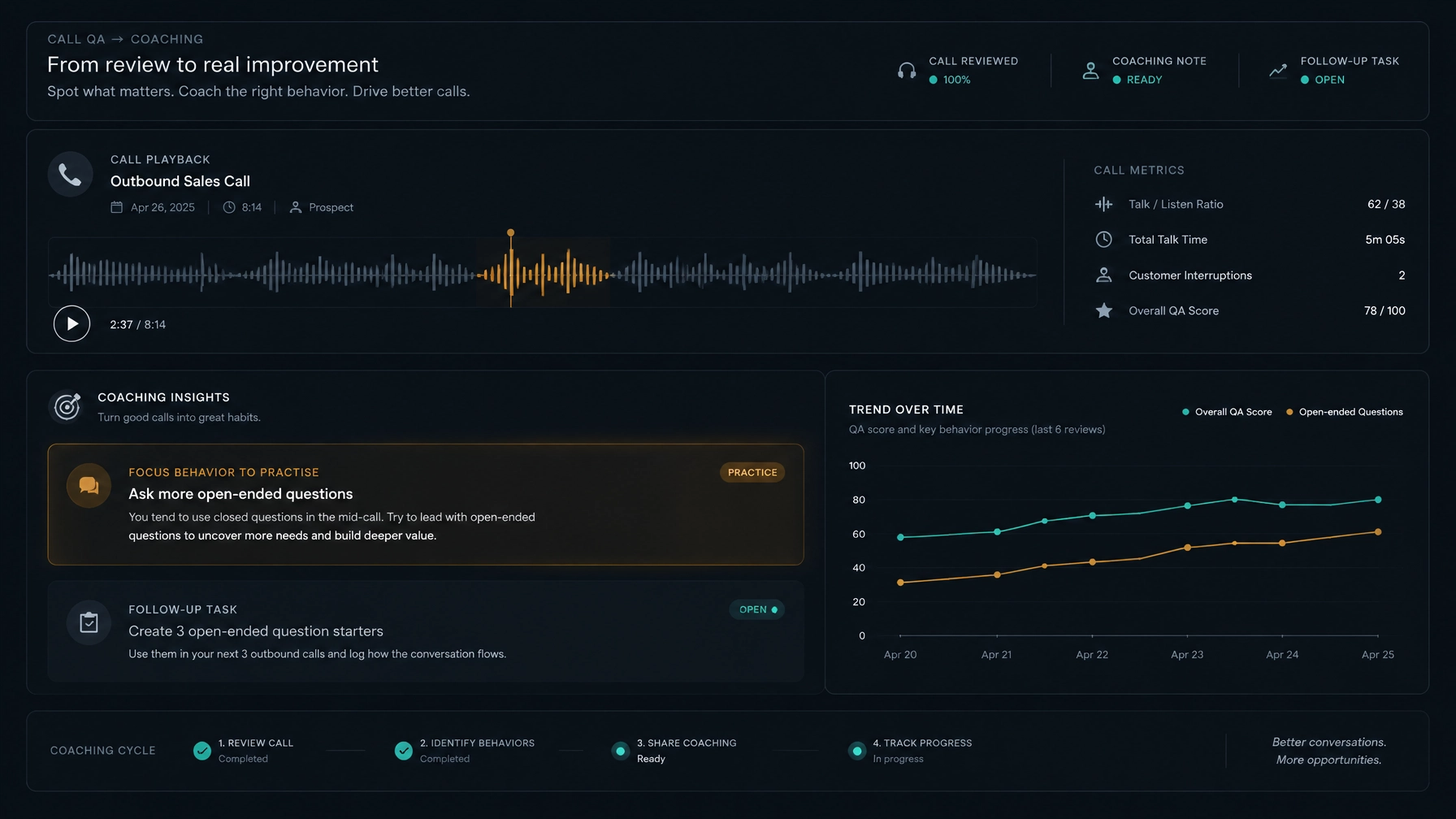
A scorecard only helps when it leads to practice and follow-up. Score the conversation, not the person. Then choose one behavior the agent can work on.
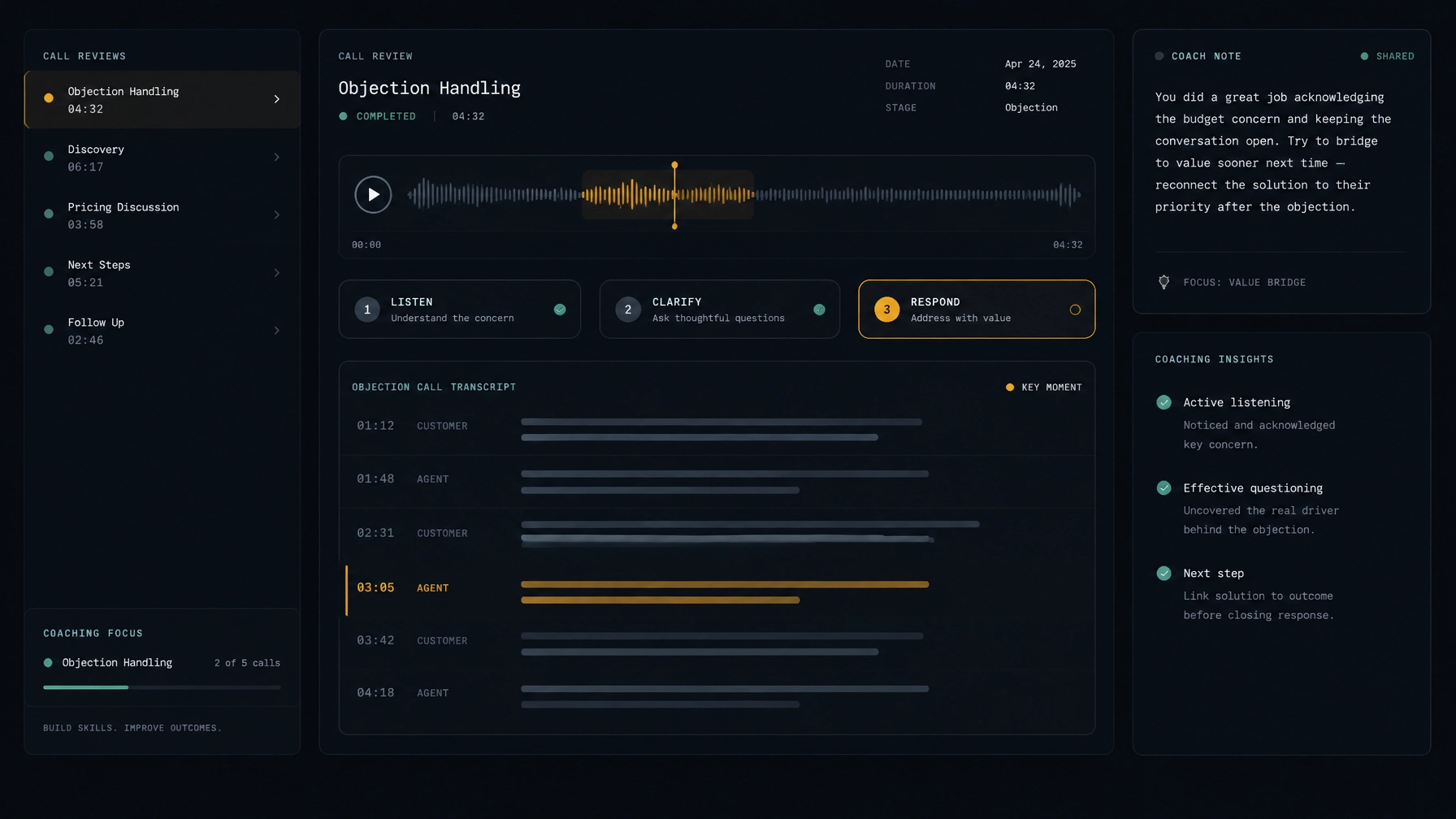
For example, a review may show that a rep responds to “We already have a provider” with a broad product pitch. The coaching action could be to practise one clarifying question before explaining the offer. In the next review, check whether the rep asked that question and how the prospect responded.
A useful coaching note includes:
- The moment: Point to a specific part of the call.
- The behavior: Describe what the rep did or could try.
- The practice: Agree on a question, response, or role-play to rehearse.
- The follow-up: Choose when to review the behavior again.
Recognize what worked as well. A rep who sets a clear next step can share that approach with the team. Keep the feedback focused so the agent leaves with one concrete action, not a list of unrelated corrections.
Check whether QA is improving outbound sales performance
A higher score is not enough on its own. Review whether the behavior changes and whether that change relates to outcomes your team cares about.
Compare scorecard patterns with measures such as connection-to-meeting rates, meetings held, or follow-up completion. Look for relationships over time, but do not assume a score caused an outcome. Lead quality, campaign fit, timing, and other factors can affect results.
Also watch for score drift. If scores rise but reviewers are applying the criteria differently, the trend may reflect inconsistent scoring rather than stronger calls. Calibration helps you interpret it.
Finally, check whether coaching happens after reviews. If the same behavior appears repeatedly without a coaching conversation or follow-up review, the process may be stopping at the score.
Common scorecard mistakes
- Too many criteria: Reviewers rush, and agents struggle to remember what matters. Keep only the criteria that support a clear goal.
- Scoring personality: “Confident” or “likable” is subjective. Score what the rep says and does.
- No calibration: Different reviewers can apply the same label in different ways. Compare evaluations and clarify the rubric.
- Coaching that ends at feedback: A score without practice and follow-up is difficult to turn into behavior change.
- Treating outcomes as call quality: A good conversation may not result in a meeting. Evaluate controllable behaviors separately from sales results.
Where call tools fit
Call records, reporting, and role-specific views can help managers organize reviews and see team activity. NexusDialer’s public site describes role-based workspaces and reports, along with call records and team status views. Its product information says post-call transcription and AI analysis require configuration; it also notes that live transcription and audio supervision are not available. If you are evaluating a QA workflow, confirm which review capabilities are available for your deployment.
You can explore NexusDialer and review its setup information. For related guidance, see how contact center teams can scale calls and coaching and common outbound calling mistakes that can cost leads.
Frequently asked questions
What is outbound call quality assurance?
Outbound call quality assurance is a consistent process for reviewing sales conversations against clear criteria. It helps managers identify effective behaviors, spot gaps, and focus coaching on specific actions.
How many calls should a QA reviewer score per month?
There is no universal number. Set a sample your reviewers can sustain, then adjust it to cover your team’s call types, agent experience, risk areas, and coaching needs. Consistent, representative reviews are more useful than a large sample chosen without a plan.
What should a call quality scorecard include?
For outbound sales, consider opening and rapport, discovery and qualification, objection handling, next-step setting, compliance-relevant behavior, and documentation accuracy. Use observable criteria that match the call type.
How do you keep call scoring consistent across managers?
Have reviewers score the same calls independently, compare ratings by criterion, and discuss where their interpretations differ. Clarify the definitions and keep examples available for future reviews.
How do you use QA scores for agent coaching?
Choose one behavior from the call, point to the moment where it occurred, and agree on a specific way to practise it. Review another call later to see whether the behavior changed.
SEO title: Outbound Call Quality Assurance: Build a Scorecard That Improves Sales Performance
Meta description: Learn how to build an outbound call quality scorecard, select calls fairly, calibrate reviewers, and turn sales call monitoring into focused agent coaching.