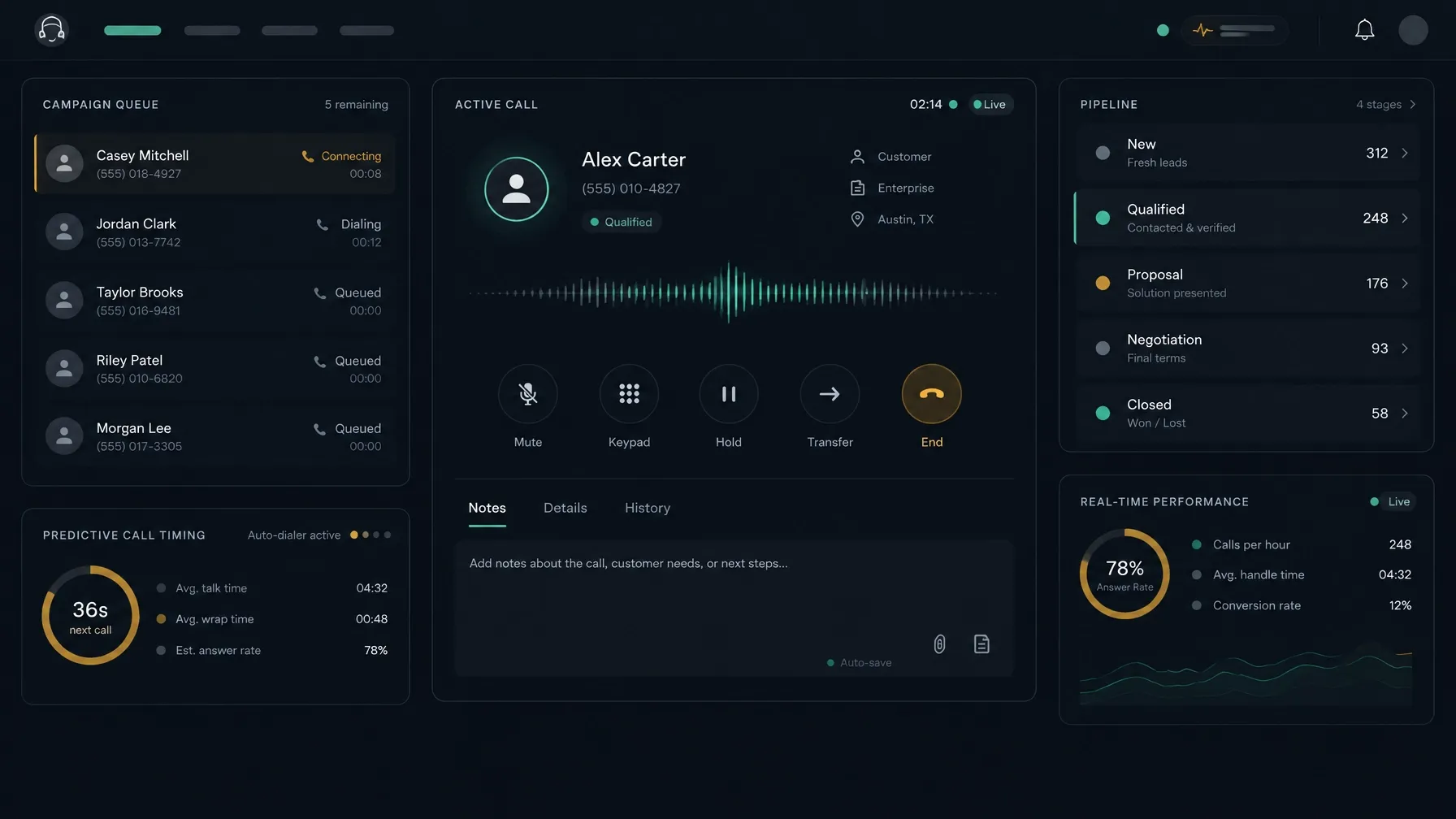
Your Business Calls Are Being Ignored Before Anyone Answers: The Hidden Problem of Spam-Labeled Phone Numbers
Your company invests in sales agents, buys leads, and makes thousands of outbound calls. But prospects see “Spam Likely” on their screens and ignore the call before anyone says hello. Your agents’ effort and lead spend can be lost before a conversation begins. When business calls are marked as spam, the label may come from…
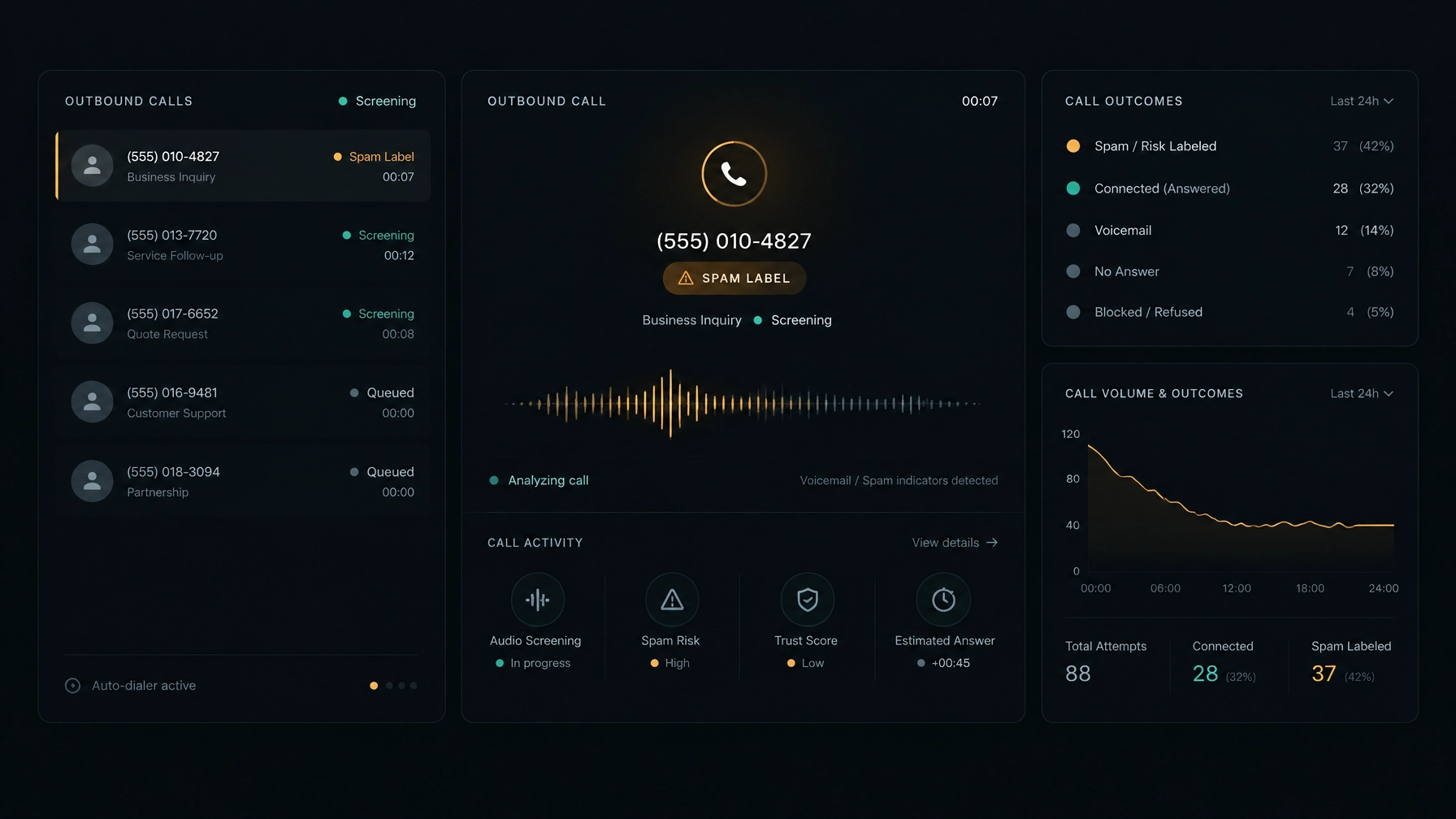
Your company invests in sales agents, buys leads, and makes thousands of outbound calls. But prospects see “Spam Likely” on their screens and ignore the call before anyone says hello. Your agents’ effort and lead spend can be lost before a conversation begins.
When business calls are marked as spam, the label may come from a carrier or a caller-ID analytics provider, not from your company or dialer. The decision can reflect patterns across calls and number history. It can also vary between providers, so the same number may appear differently to different people.
You can’t control every label. You can understand the signals that may contribute to one, improve your calling practices, and ask better questions about your telephony setup.
1. Why legitimate business numbers get flagged
A spam label does not prove a business is making unwanted calls. Automated screening systems look for patterns that may resemble unwanted or suspicious activity. Legitimate teams can produce those patterns by accident.
Common contributors include:
- High call volume from one number. A sudden increase or concentrated volume may look different from the number’s prior activity.
- Many short calls. A high share of calls that end quickly may indicate people are rejecting or abandoning them.
- Low answer or completion patterns. If few people answer or calls rarely lead to a conversation, that may be one signal among others.
- Calls to people who don’t engage. Unanswered calls, wrong numbers, disconnected lines, or contacts with no interest can add up.
- Complaints and “report spam” taps. Recipient feedback may inform reputation assessments.
- Number history. A recycled number may carry a history from its previous user.
- Little or no history. A new number may lack the activity record that helps providers assess it.
No single factor necessarily triggers a label. The weight given to each signal varies, and providers do not all use the same methods.
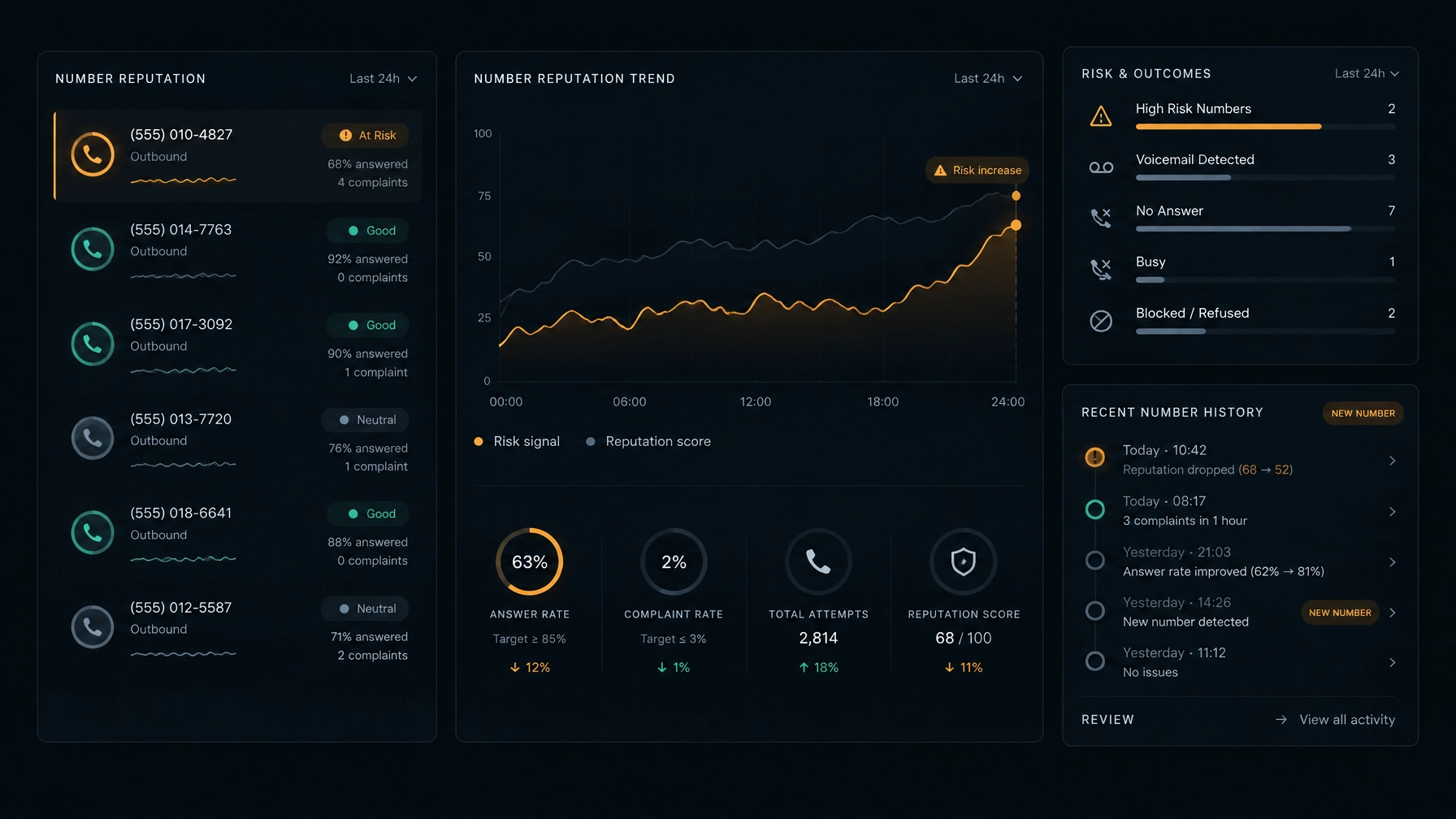
2. How caller-ID reputation is assessed
Caller ID reputation is an assessment made by external carriers and caller-ID analytics providers. It isn’t a universal score owned by your business, and your dialer may not have access to it.
Providers can consider patterns such as call volume, answer and completion behavior, complaint rates, number history, and caller-ID authentication information. Some may also use data shared across networks or other sources. The exact signals and their weight aren’t necessarily public.
That means two things for your team:
- Different systems may hold different views of the same number. A label shown by one carrier or device may not appear on another.
- You may not be able to see a single reputation score. Instead, you may need to monitor call outcomes, check the caller-ID experience on relevant networks, and ask your carrier or service provider what review options are available.
Treat an unexpected label as a reason to investigate, not as a diagnosis. Check whether it affects one number, one campaign, a particular audience, or several calling routes. Compare recent activity with the number’s earlier patterns. That can help you narrow down what changed.
3. What STIR/SHAKEN and branded caller ID do
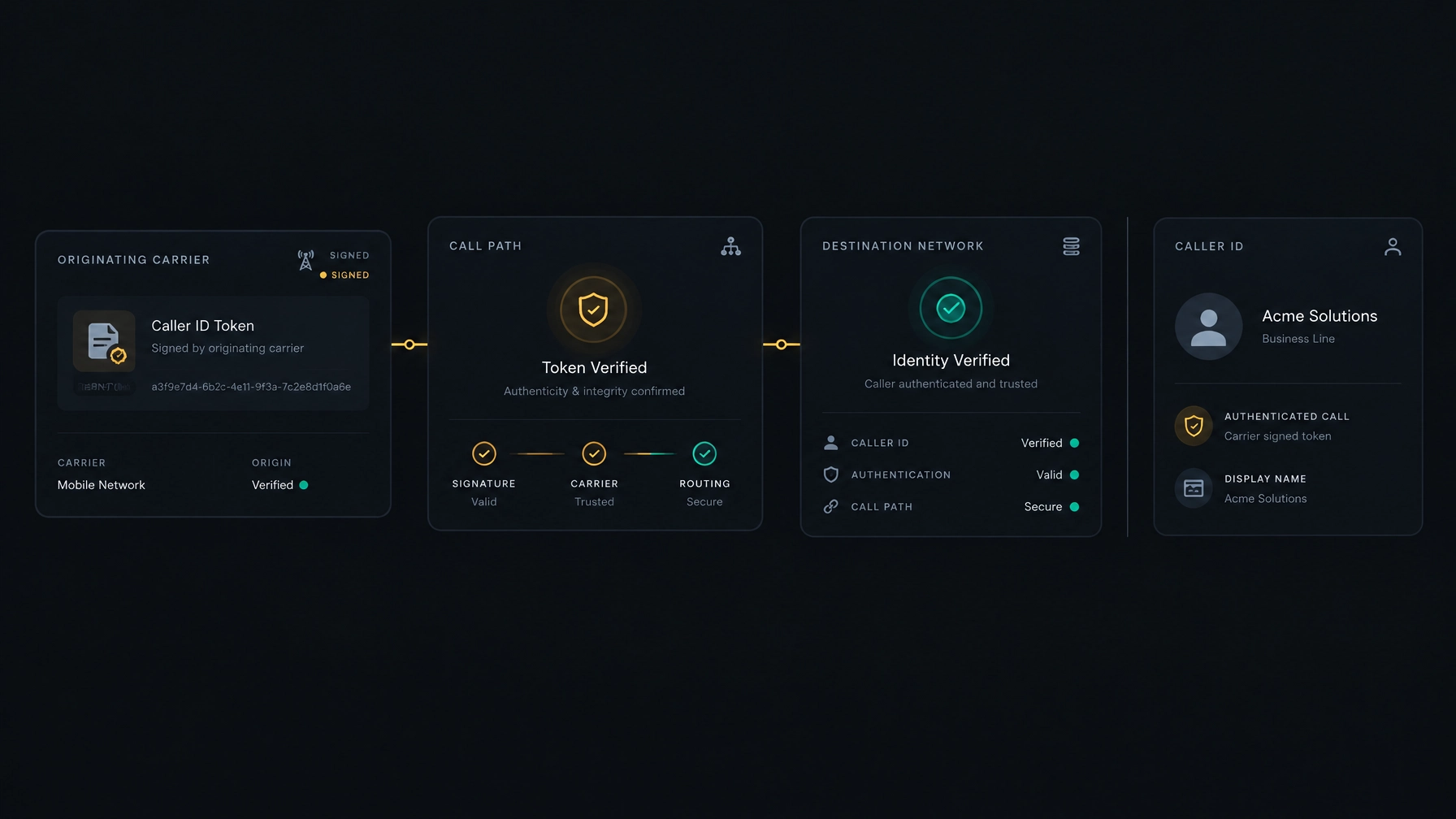
STIR/SHAKEN authentication helps verify that a call’s displayed number is authorized by the originating provider. In broad terms, the provider assigns an attestation level based on its relationship with the caller and its ability to confirm the caller’s right to use the number.
The levels are commonly described as:
- Full attestation: The provider has verified the customer and their authorization to use the number.
- Partial attestation: The provider knows the customer but can’t confirm their right to use that particular number.
- Gateway attestation: The provider is handling the call as a gateway and has limited information about the originating caller.
STIR/SHAKEN helps authenticate the origin of the call. It does not prove that the caller’s purpose is legitimate, remove a spam label, or guarantee that a call will be delivered or answered. A properly authenticated call can still be labeled or blocked.
The FCC’s overview of caller-ID authentication explains the role of this framework.
Branded caller ID is a separate mechanism. Where supported, it may show a business name or logo on a recipient’s device. What appears depends on carrier, provider, device, and service support. Don’t assume that branded caller ID is active just because your number is authenticated, or that it prevents a spam label.
4. How calling practices can damage number reputation
Your calling process affects the experience people have with your numbers. Patterns that lead to poor experiences or repeated complaints can make it harder to build trust in those numbers.
Watch for practices such as:
- Dialing unengaged or poorly sourced lists at an aggressive pace.
- Retrying the same number repeatedly, especially within a short period.
- Calling outside permitted hours or ignoring a requested callback time.
- Calling numbers that should be suppressed, including applicable do-not-call records.
- Continuing outreach after an opt-out or complaint.
- Rotating numbers to hide who is calling or work around a label.
- Using dialing volume that doesn’t match the quality of the list or the team’s ability to handle answered calls.
Frequent number rotation may obscure patterns from your own team, frustrate recipients, and make it harder to maintain a consistent identity. It isn’t a substitute for diagnosing the cause of a label.
If you’re reviewing call timing, see Calling Hours Across Time Zones. Requirements depend on the campaign and location. This article is general information, not legal advice.
5. Practical ways to protect your calling identity
A consistent, respectful calling operation gives you more control over the behaviors that are within your reach. Start with these steps:
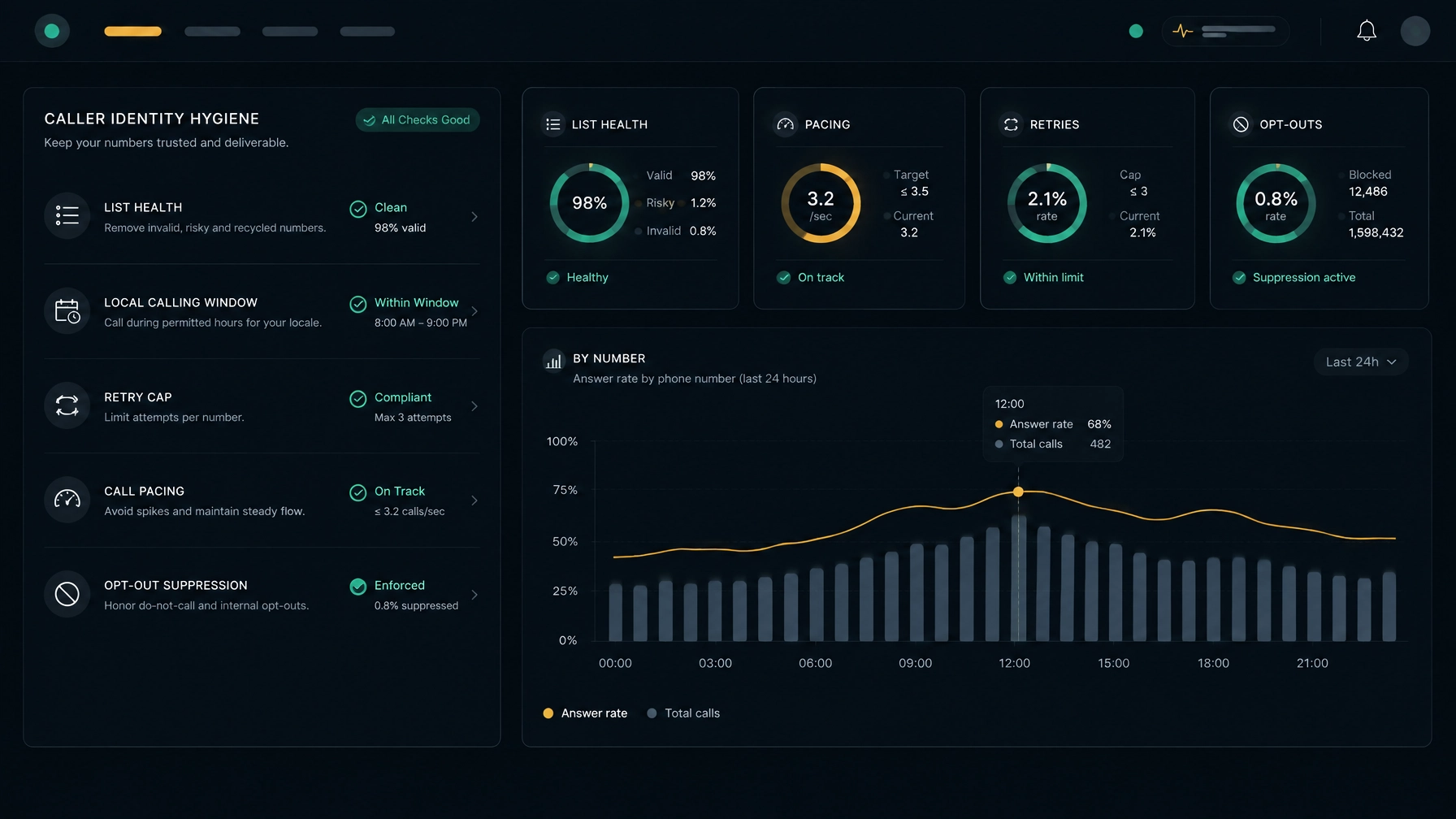
- Keep lists clean and consent-aware. Remove duplicates, wrong numbers, and records that no longer belong in a campaign. Maintain suppression records and honor opt-outs.
- Match pace to list quality. Don’t increase volume just because agents have time to dial. Check whether your list can support the planned activity and whether agents can handle the calls that connect.
- Set sensible retry rules. Avoid repeated attempts to unreachable contacts. Use a clear cadence, record outcomes, and respect requested callback times.
- Watch answer rates by number and campaign. A team-wide average can hide a problem with one number or list source. Review trends alongside other outcomes, such as wrong numbers, short calls, and complaints.
- Make complaint handling visible. Give agents a clear way to record opt-outs, wrong numbers, and objections. Review those records and make sure they affect future outreach.
- Use authentication where available. Ask your carrier or telephony provider whether calls can be authenticated and what information or configuration they require.
- Keep your business identity consistent. Use numbers your organization is authorized to display. Ask your provider about caller-name presentation or branded calling options, if available.
- Treat numbers as assets with history. Assign numbers intentionally by campaign or use. Track their activity and avoid frequent changes that make it harder to understand performance.
If a number appears to be labeled, first identify where and when the label appears. Then review the number’s recent activity and campaign setup. Ask your carrier or provider about available investigation or correction processes. Stop any practices that may be producing complaints or unwanted repeat calls. There is no standard recovery timeline, and a review does not guarantee a label will be removed.
6. How to evaluate your dialer and telephony setup
A dialer can shape calling patterns through how it supports lists, campaign workflows, dialing, and reporting. It can’t control every decision made by carriers or analytics providers. Ask vendors specific questions before you rely on a platform to support caller identity:
- What does the platform control? Ask what it does, and does not, manage for caller ID, authentication, or number presentation.
- Can you keep your SIP provider and numbers? If you want to retain existing telephony arrangements, confirm how the platform supports your provider and what setup is required.
- Can you review results by number and campaign? You need enough visibility to spot changes in answer rates and campaign outcomes before they are masked by team-wide totals.
- How does campaign management support good calling practices? Ask how you can organize campaigns, manage lists, and align activity with the people you’re trying to reach.
- Who handles investigation? Clarify whether your carrier, platform provider, or another party can help review a caller-ID issue, and what information they need.
NexusDialer supports BYOS SIP flexibility, so teams can keep an existing SIP provider, and offers campaign management, real-time analytics dashboards, a predictive AI-powered dialer, and a built-in CRM. These tools can help teams organize outbound operations and review performance. They do not guarantee a particular caller-ID label, number reputation, or answer rate.
For a related look at measuring call outcomes, read Why Are Your Business Calls Going Unanswered?. To assess SIP flexibility, see How to Reduce Contact Center Costs Without Switching SIP Providers.
Reputation and labeling decisions rest with carriers and analytics providers. No dialer or telephony vendor can guarantee that a number will never be labeled or blocked. You can, however, choose infrastructure that supports a more organized calling operation and gives your team better visibility into what is happening.
Explore NexusDialer to review its outbound calling platform and see whether it fits your team’s setup.
Frequently asked questions
Why is my business number showing as spam?
A carrier or analytics provider may have assessed the number using signals such as call patterns, recipient complaints, number history, and authentication information. A new or recycled number may also lack a clear, positive history. The exact cause can be difficult to identify because providers use different methods.
Does STIR/SHAKEN stop spam labels?
No. STIR/SHAKEN helps verify that a call comes from a number the caller is authorized to use. It doesn’t establish that the call is wanted, remove spam labels, or guarantee delivery or an answer.
How do I address a spam-labeled number?
Find out where the label appears, then review call activity by number and campaign. Check list quality, repeat attempts, complaints, and calling patterns. Contact your carrier or provider to ask what review options are available. Avoid rotating numbers to hide the issue. There is no guaranteed removal process or recovery timeline.
Does a dialer affect caller-ID reputation?
A dialer can influence calling patterns through campaign volume, pacing, and retry workflows. Those patterns may be considered by external providers, but the dialer does not determine the label. Ask what the platform supports and what remains under the control of your carrier or third parties.
Can a vendor guarantee that calls won’t be labeled as spam?
No. Labeling and blocking decisions are made by carriers and analytics providers, and results can differ across networks and devices. A vendor may support calling workflows or authentication options, but it cannot guarantee a label or answer rate.