Why Prospects Say No: 10 Common Cold-Calling Objections and How Great Sales Agents Handle Them
A prospect’s “no” can mean several things. The timing may be wrong. The offer may not seem relevant. They may not trust the caller yet, or they may not understand why the call matters. What an agent says next can either clarify the concern or end the conversation. That does not mean every objection should…
A prospect’s “no” can mean several things. The timing may be wrong. The offer may not seem relevant. They may not trust the caller yet, or they may not understand why the call matters. What an agent says next can either clarify the concern or end the conversation.
That does not mean every objection should be overcome. Sometimes the prospect is clearly declining, and the right move is to thank them and stop. The goal of good sales objection handling is to understand what the person means, respond honestly, and leave them in control.
Listen before you answer
An objection is useful information, not an invitation to deliver a rebuttal. Acknowledge what you heard. Ask one clear question if it makes sense. Then respond to the answer, not to the objection you expected.
A short pause can help. So can a plain response such as, “I understand,” before you ask anything else. If the prospect repeats their no or asks not to be contacted, accept it. No script guarantees a meeting, and a respectful end to a call is better than pressure.
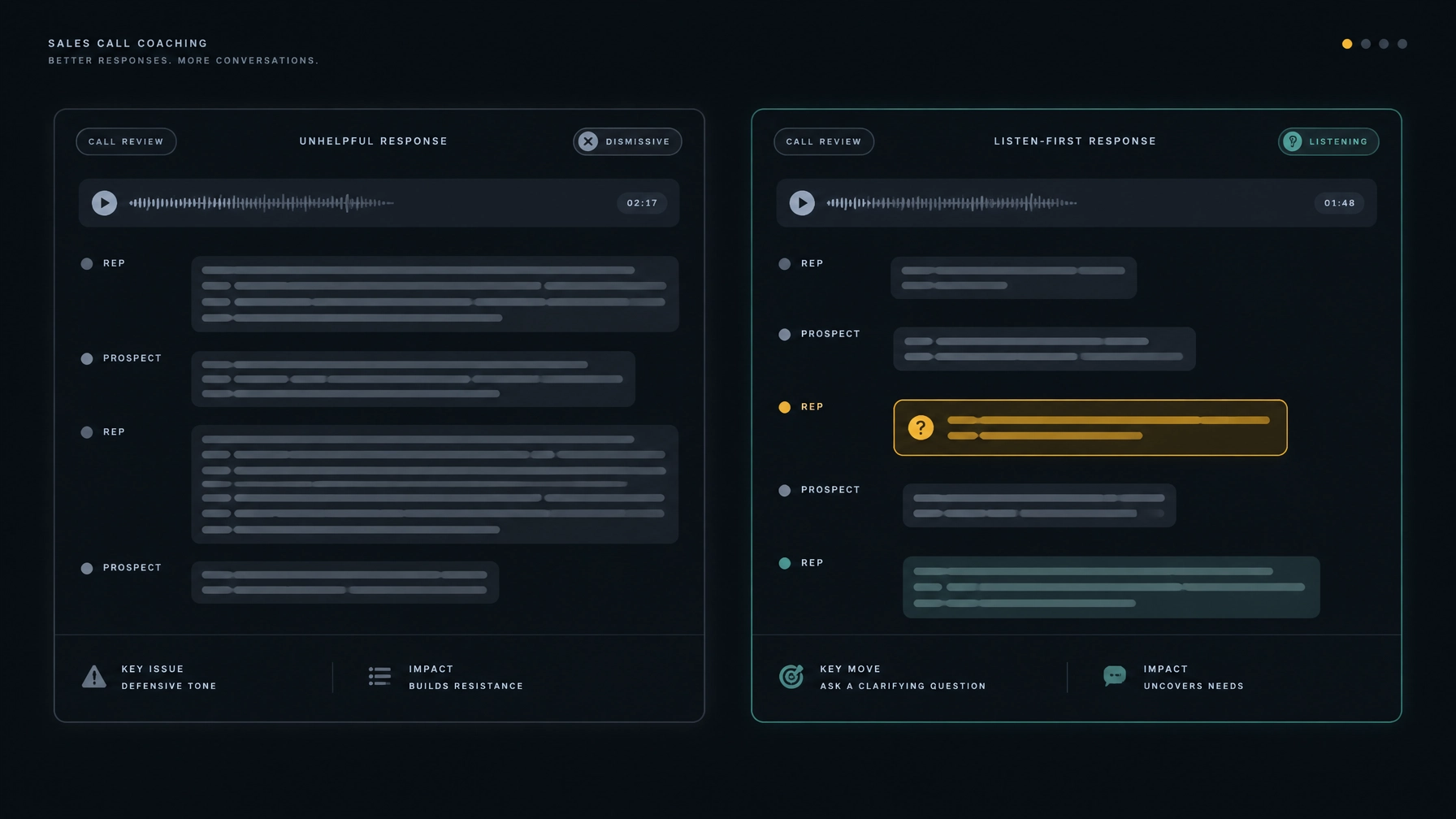
10 common cold-calling objections and how to handle them
The examples below are starting points, not lines to recite. Adapt them to your offer and the prospect’s answer. Never imply a result, price, referral, or source of contact that you cannot verify.
1. “I’m not interested.”
What they may mean: The offer sounds irrelevant, they are busy, or they simply do not want the call.
Before: “You haven’t even heard what we do yet.”
After: “Understood. I won’t push. Would you prefer I mark this as not a fit, or is it simply not a priority right now?”
Why it works: It avoids arguing and gives the prospect a clear way to end the call. If they say they do not want further contact, record and honor that request.
2. “We already work with someone.”
What they may mean: They have a provider they trust, a contract in place, or no reason to consider a change.
Before: “Our solution is better than what you have.”
After: “That makes sense. If you’re open to it, what matters most in your current setup? I’m trying to see whether there’s a relevant reason to compare options, not assume you need to switch.”
Why it works: It respects the existing relationship and checks for a real need before suggesting a comparison. If there is no gap or interest, move on.
3. “Send me an email.”
What they may mean: They want to end the call, or they need information before deciding whether to talk.
Before: “Sure. I’ll send you everything.”
After: “I can send a short note. To make it relevant, what would you want it to cover? If now isn’t a good time to discuss it, that’s fine too.”
Why it works: It makes the follow-up specific instead of sending a generic information dump. Confirm the appropriate address and any required permission before sending.
4. “I don’t have time right now.”
What they may mean: They are genuinely busy or do not want an unplanned conversation.
Before: “This will only take a minute.”
After: “Understood. Would another time be better, or should I leave it here?”
Why it works: It offers a simple choice without disputing their schedule. If they choose a time, repeat it back and record it accurately.
5. “How much does it cost?”
What they may mean: Price is a key qualification point, or they want to know whether continuing is worthwhile.
Before: “It depends. Let me tell you about the features first.”
After: “The price is [accurate price or range]. It can vary based on [the actual factors that affect it]. Would that be within the range you’re considering?”
Why it works: It answers the question directly. If you do not know the price, say so and explain how the prospect can get an accurate figure. Do not use a meeting to withhold information they asked for.
6. “Call me back later” or “next quarter.”
What they may mean: The timing is wrong, or they are trying to defer the conversation without committing.
Before: “I’ll try you again sometime next quarter.”
After: “Sure. Is there a particular week that works better? I can note that, or I can leave it here if you’d prefer.”
Why it works: It turns a vague request into a clear next step while leaving the choice with the prospect. Record the agreed date and follow your team’s contact rules.
7. “We handle this in-house.”
What they may mean: They have internal staff or processes and see no reason to bring in another option.
Before: “That’s exactly why you need us.”
After: “Understood. What part do you manage internally? I can check whether there’s a specific area where an outside option would be relevant, or whether it’s already covered.”
Why it works: It explores the setup without dismissing the team’s capability. If there is no relevant need, do not manufacture one.
8. “I’m not the right person.”
What they may mean: They are not responsible for the decision, or they do not want to be involved.
Before: “Who is? Put them on the phone.”
After: “Thanks for letting me know. Is there a role or team that normally reviews this? No problem if you’re not able to point me in the right direction.”
Why it works: It asks for guidance without treating the person as an obstacle. Do not claim they referred you unless they actually did.
9. “We tried something like this before and it didn’t work.”
What they may mean: They had a poor result, the rollout was difficult, or they do not want to repeat the experience.
Before: “That won’t happen with us.”
After: “I can understand why you’d be cautious. What didn’t work last time? If the issue is something we can’t address, I don’t want to waste your time.”
Why it works: It makes room for the real concern and avoids promising a different outcome without evidence. Listen for the specific problem before deciding whether there is a meaningful fit.
10. “Where did you get my number?”
What they may mean: They want to know why they were contacted and how their information is being used. They may also be asking you to stop.
Before: “It’s in our system. Anyway, can I tell you why I’m calling?”
After: “Your number came from [the accurate source]. We use it for [the accurate purpose]. If you’d rather not receive calls from us, I can record that request.”
Why it works: It answers plainly and puts the prospect’s choice first. If you cannot verify the source, do not guess. Pause and check your records and process before continuing. Honor any request not to be contacted, and follow the privacy, consent, and telemarketing rules that apply to your campaign and location. For U.S. calls, review the FCC’s telemarketing rules and get qualified advice for your specific process.
Turn objection handling into a coaching programme
A useful sales agent coaching routine turns real calls into repeatable practice. It does not ask every rep to memorize the same answer. It helps them listen, make a sound judgment, and choose a clear next step.
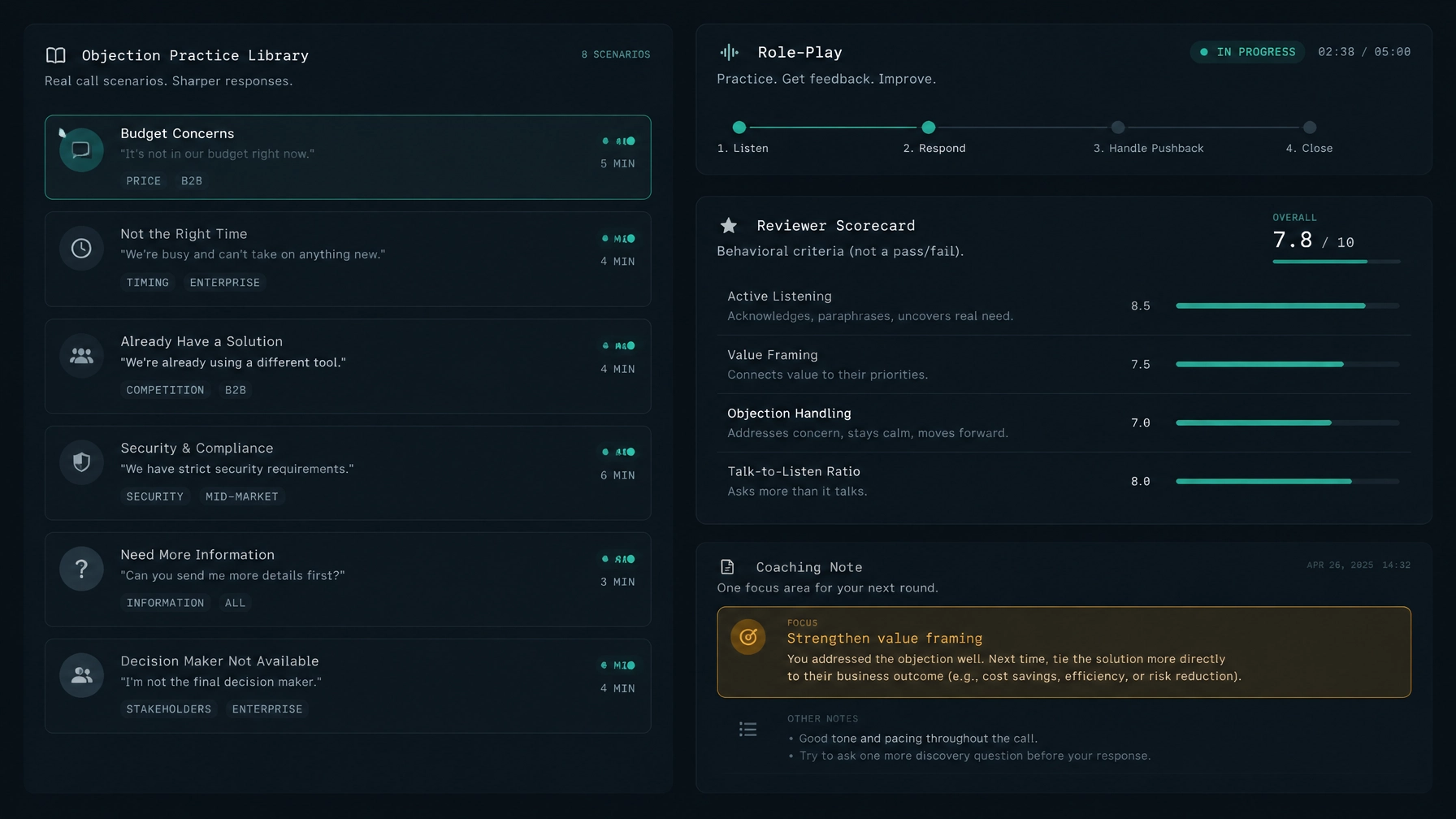
- Practise the ten objections. Use short role-plays. Let reps practise acknowledging the concern, asking one useful question, and responding without pressure.
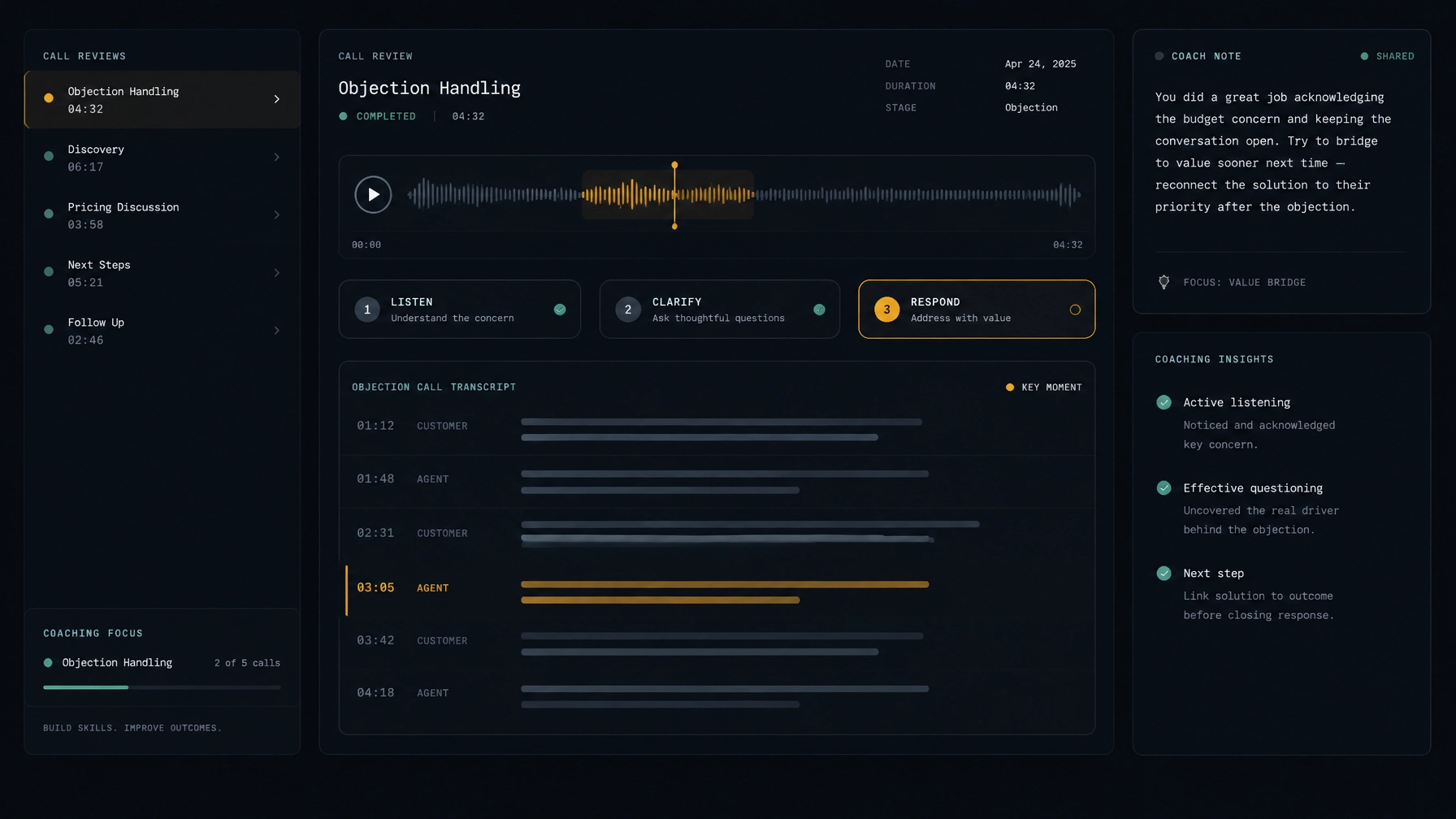
- Review real calls. With the required notice, permissions, and access controls in place, select calls where an objection came up. Review the moment, not just the final outcome.
- Score observable behaviors. For example: Did the rep acknowledge the concern? Ask a relevant question? Give an accurate answer? Respect a clear no?
- Build an internal objection library. Save examples from your own calls, including strong responses and moments that need work. Keep the examples current and remove personal data where appropriate.
Use a simple review note: what happened, what the agent did, and one thing to try next time. A call-quality scorecard can help managers apply criteria consistently; see how to build a call quality scorecard.
Measure the conversation, not just the meeting
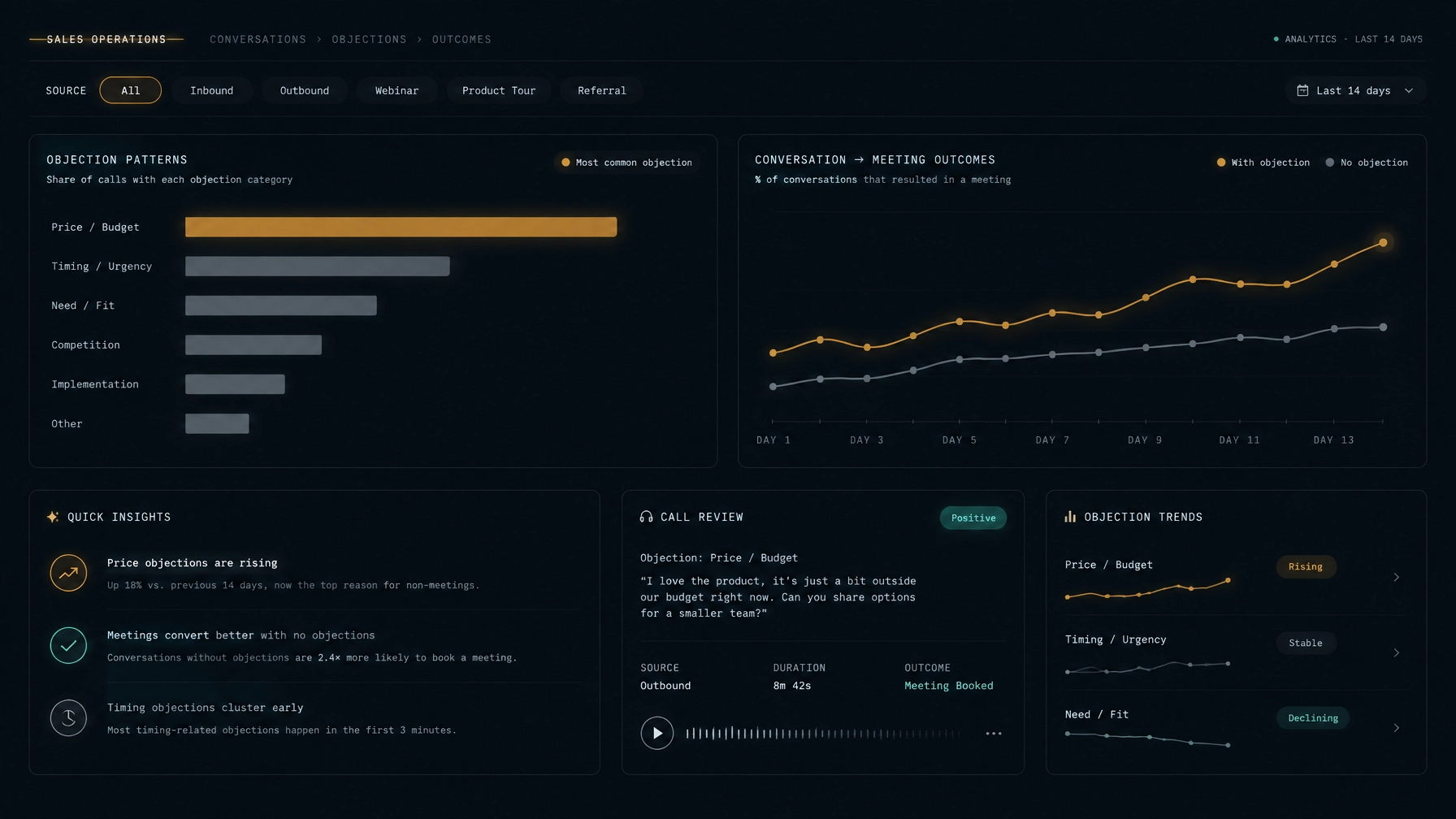
A rise or fall in meetings does not tell you by itself whether objection handling improved. Review several signals together:
- Conversation-to-meeting rate: Of substantive conversations, how many lead to a meeting? Compare like-for-like campaigns and time periods.
- Objection patterns by list source: Are certain lists producing more wrong contacts, provider objections, or clear opt-outs? That may point to targeting or data issues.
- Objections that lead to opportunities: Check which objections are followed by a relevant next step, and which usually end the conversation. Use this to guide prioritization, not to pressure prospects whose concerns are genuine.
- Call-review behaviors: Are reps clarifying more often, giving direct answers, and respecting declines? Review examples as well as scores.
Look for patterns, not proof of cause. List quality, timing, offer fit, and other factors can affect results. The connection rates guide can help you separate issues with reaching prospects from issues within the conversation.
Where coaching tools fit
A structured process needs clear review criteria and a way to follow up. NexusDialer’s public site describes role-based workspaces, reports, and call records. Its site also notes that audio supervision is not available, and that post-call transcription and AI analysis require configuration. Confirm which review capabilities are available for your deployment before building them into a coaching process.
You can explore NexusDialer to review the current workspace and setup information.
Frequently asked questions
How do you handle the “not interested” objection?
Acknowledge it without arguing. If appropriate, ask one brief question to understand whether they mean “not now” or “not a fit.” If they decline further discussion or ask not to be contacted, end the call and record the request.
Should agents argue with an objection?
No. An objection is a reason to listen and clarify, not to prove the prospect wrong. Answer their concern honestly, then accept their decision.
How do you train objection handling?
Practise common scenarios in role-play, review real calls where permitted, and coach against a small set of observable behaviors. Give each agent a focused action to practise, then review it again.
What should a manager track?
Track conversation-to-meeting rates alongside objection types, list source, and call-review behaviors. Interpret these together; a meeting rate alone does not show why a conversation progressed or stopped.
A better response does not guarantee a conversion. It gives the prospect a fair chance to explain, helps the agent decide whether there is a real fit, and makes the next step clear. That is a useful standard for every cold call.
SEO title: 10 Common Cold-Calling Objections and How to Handle Them
Meta description: Learn how to respond to 10 common cold-calling objections with practical, respectful examples, plus a coaching and measurement plan for your sales team.